

- JBL’s reputation spans nearly 100 years
- Find out how JBL became a market leader in the audio world
- Learn about JBL’s rich history
JBL is a huge name when it comes to speakers and headphones. From their immensely successful line of earbuds, soundbars, hi-fi speakers and more, JBL has become a household name.
At the time of writing, JBL is owned by Harman International, a subsidiary of Samsung.
Let’s look at JBL’s fascinating story from its humble beginnings to today.
The History of JBL
Formation (1946)
The company was founded by James Bullough Lansing in 1946, hence the JBL name. Although JBL was conceived in the ’40s, Lansing’s expertise dates back to 1927 with the formation of the Lansing Manufacturing Company.
Partnering with Ken Decker, Lansing’s first business built loudspeakers and drivers for cinemas and movie theatres.
After teaming up with MGM, the Shearer Horn was born, with a 285 compression driver and 15XS bass driver that became a revolutionary turn in the industry. The company had a short but successful stint working in the movie business until Decker was sadly killed in a plane crash in 1939.
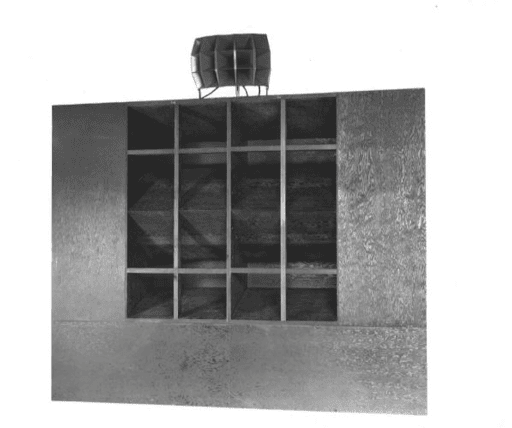
His death resulted in financial troubles that ultimately led the company to be bought out in 1941, accompanied by a name change to ‘Altec Lansing’, a company that still exists under the same name today.
James Bullough Lansing worked with the company until the end of his contract in 1946, when he began his own venture, which (after a few changes) adopted the name JBL Sound.
What Were The First JBL Products?
Interestingly, Lansing’s original plan was to design and build audio products for home use, but as many success stories go, he deviated from this and branched into several different areas.
The first speaker manufactured by the JBL brand was the D130. This was a 15-inch speaker that was intended for use in movie theatres but rapidly gained popularity among musicians and other audio professionals for its sound quality. The D130 became so legendary that you can still check out its original sales brochure here. Many other JBL products retained popularity, including the D175 driver, which stayed in the JBL catalog until the 1970s.

Pairing up your JBL headphones? Check out our ultimate guide for all devices right here.
The Death of James Bullough Lansing (1949)
While he was an audio pioneer, it is reported that J.B.L. had much to be desired on the business front. His creative skills were innovative, and he was a talented engineer, but his approach to running the business was severely inhibited after the death of his partner, Ken Decker.
Sadly, this led to unpaid bills and other practical issues, and ultimately, Lansing committed suicide in September 1949 at the age of 47. Bill Thomas, Vice President of the company at the time, took over, and due to a $10,000 life insurance policy that Lansing had taken out (with the company being the sole beneficiary), Thomas could keep pushing forward as the sole owner.
While that doesn’t seem like much by modern standards, this would equate to roughly $125,000 today.
Thomas is frequently credited with the company’s growth over the next two decades despite the initial tragedy of losing Lansing.
JBL’s Rennaisance (1970’s)
Following the Woodstock festival in 1969, at which JBL provided much of the equipment, the company built on previous successes as they moved into the 1970s.
In fact, the ’70s became a pivotal time for the company as it diversified into the wider market. Rock music was exploding, and the way people listened to it was changing, with artists and recording engineers wanting to listen at louder volumes.
JBL’s 4350 monitors became a popular choice because of this. Sustaining 125dB each, they were famously used in The Who’s studio, a band who became synonymous for their sheer volume. Other monitors paled in comparison, meaning JBL was able to dominate the market in the ‘70s.

Tying in with the ever-increasing popularity of rock n’ roll, live sound also became supercharged. There were no dedicated touring loudspeakers until JBL came along, who were again favored for their power and volume.
Interestingly, when engineers started searching for a solution for their live needs, their first port of call was the cinema market, and of course, JBL was quick to step in and address their needs.
Another contributing factor to JBL’s success was the inability of Alec Lansing, who became a key competitor in the 1970s, to keep up with its powerful product range of speakers. This is partly due to the increasing costs of repairs to equipment, with touring staff pushing their speakers to the maximum.
The repairs themselves became more costly than the sales, and so Altec Lansing dropped out from the race and stopped pursuing growth in the live sector. JBL was thriving largely due to their 375 and M.I. (‘Musical Instrument’) drivers that handled power much more efficiently than Altec Lansing’s counterpart, the 288.
JBL was louder and more powerful and blew the competition out of the water.
Breaking Onto The Big Screen (1980’s and 1990’s)
Cinema audio crops up a lot throughout the history of JBL, but interestingly, by the 1980s, the JBL brand had yet to make a significant dent in this area of the industry. As before, their main competition in this area was Altec Lansing, which had become the go-to brand ever since their ‘Voice of the Theatre’ (VOTT) loudspeaker system was launched in 1945.
A conjunction of events gave JBL a foot in the door that was enough to solidify its presence as a key player in the cinema audio market. The first key event was JBL’s development of the Bi-Radial Horn series. Current solutions came with dispersion issues that resulted in a limited high-frequency range, something that Bi-Radial would improve upon.
In 1981, at the AES (Audio Engineering Society) convention, JBL’s John Eargle showcased a paper that outlined the limitations of cinema audio systems and how JBL had the technology to surpass these problems.
The paper’s success at AES led to JBL being chosen to provide a state-of-the-art audio system for the Academy of Motion Picture Arts and Sciences, who were renovating their own theatre and looking to upgrade their setup. This became a huge milestone for the company and another key event that allowed it to become a major player in the cinema industry.
Moving forward to the 1990s, JBL became more involved in the home audio market, as well as a special new release in 1996 to mark the 50th anniversary of the company in the form of the Century Gold system. This was intended to be a limited edition item, but an extremely high demand meant it stayed in production for the following four years.

After a hugely successful few years, JBL followed up their involvement in Woodstock ’69 by closing the decade with Woodstock ’99. While the festival infamously didn’t go to plan, it was nonetheless a landmark event in JBL’s rich history.
Don’t forget to check out JBL Flip 5 vs. Flip 6 (Differences & Which Is Right For You)
Modern Day JBL (2000’s & Beyond)
The turn of the millennium meant a lot for music and how it was consumed. With the first iPod becoming available in 2001, things shifted heavily toward a more portable music-listening format.
JBL was keen to capitalize on this and began creating headphones and speakers designed for use on the go, whether commuting to work or going to the gym. Fast forward to today, and there is a JBL product for any audio need, from audio professionals to gamers and even people who want a party speaker.
To this day, JBL is still a pioneer of the audio world.

FAQ
What Happened To Altec Lansing?
Altec Lansing was a key competitor for a large period of JBL’s lifetime, with JBL beating them to the post with many products and developments, but the company is still going strong.
They share some similarities with JBL in their headphone and speaker range but tend to lean more towards consumer audio with a smaller product range that doesn’t cross over as deeply into professional and premium audio.
If you’re searching for help with your JBL products, consider checking out:




An interesting read, but it completely glosses over JBL’s role in delivering incredible solutions to the major touring artists who were packing stadiums, arenas, concert halls, etc all across the globe and JBL and thier staff were the “go-to” people to make that happen. Is any one tracking those hostoric nuggets or do they just fade away with time ?
Hey Calvin! Thanks for the constructive feedback. We’ll definitely look into getting that info included in a future edit!