

The Korg Polysix is an iconic programmable polyphonic analog synthesizer that made waves in the music world when it was first released in 1981.
In direct competition with other popular synths of the time, such as the Roland Juno 6, the Polysix stood out by offering one extra voice of polyphony (a total of 6) and innovative features like unison and chord memory voice assignment modes.
At the bottom of the article, we’ve left a free sample pack of Korg Polysix samples for you to download. Enjoy!
Today, the Korg Polysix is remembered not just as an iconic piece of analog synthesis, but as a testament to Korg’s engineering ingenuity, and a symbol of the dawn of a new era in music production.
Korg had already built up a solid reputation with the likes of the MS-20 in the late ’70s, and showed little signs of slowing down.

Key Takeaways
- The Korg Polysix offered a breakthrough in polyphony and affordability for 1980s synthesizers.
- Its innovative features and warm, analog tones continue to influence music production.
- The legacy of the Korg Polysix has endured, exemplifying Korg’s engineering and creativity.
Origins and Development of the Korg Polysix
Design Philosophy
The design philosophy behind the Korg Polysix was focused on creating a practical and accessible polyphonic synthesizer for musicians. Its straightforward interface made it easy for users to create and modify patches quickly.
The Polysix also offered 32 memory slots for storing patches and a cassette port for backing up sounds, making it an attractive option for musicians seeking versatility and convenience.
Technical Innovations
The Korg Polysix featured several technical innovations that made it unique in its time. Its six-voice polyphony allowed for rich layering of harmonics, and the addition of unison and chord memory voice assignment modes made it even more versatile for musicians.
Additionally, its arpeggiator function allowed users to create intricate patterns and sequences with ease.
Another notable innovation was the Polysix’s flexible modulation routing capabilities. Musicians could easily control the filter’s cutoff frequency, oscillator pitch, and pulse width using the selectable envelope generator or LFO. This opened up a wide range of sonic possibilities for both beginners and seasoned synth players alike.
The Polysix’s ensemble effect brought depth and width to the sound, giving it a distinct character and appealing to many musicians searching for a lush, rich sound. This feature, along with its other innovations, allowed the Polysix to leave a lasting impact on the world of synthesizers and
The Korg Polysix in Music Production
Adoption by Artists
Many artists appreciated the Polysix’s distinctive warm-sounding real analog oscillators, which provided a soft, brassy sound that could easily compete with more expensive models.
Combined with the powerful built-in chorus and ensemble effects, the Polysix could create an array of rich, organic sounds that musicians found particularly appealing. Some of the artists who adopted the Polysix include:
- Keith Emerson, a pioneer of progressive rock and a member of the band Emerson, Lake & Palmer.
- The Cars, an American rock band known for their new-wave musical style.
- Robbie Bronnimann, a British electronic music artist influenced by many techno, house, and trance genres.
- Tears For Fears, a British pop-rock band formed in Bath in 1981 by Curt Smith and Roland Orzabal.
Contribution to Genres
The Korg Polysix has made significant contributions to various music genres. Some genres that the Polysix has prominently influenced include:
New wave and synth-pop: These two genres emerged during the 1980s, and the Polysix played a crucial role in shaping their distinct sound. With its ability to create Mellotron-like strings and rich, evocative textures, the Polysix helped artists produce tracks that blended electronic and organic sounds.
Electronic dance music (EDM): As the popularity of dance music grew, the Polysix continued to make an impact. Its warm, analog sound and powerful arpeggiator made it an excellent tool for creating memorable dance tracks in genres like techno, house, and trance.
Ambient and experimental music: The Polysix also found a home in the world of ambient and experimental music. Its versatile sound palette and rich modulation options allowed artists to explore new soundscapes, creating atmospheric and immersive sonic experiences.
Software Emulations and Modern Legacy
In the digital age, the Korg Polysix’s influence lives on as it has been recreated in virtual form as part of the Korg Legacy Collection (now just dubbed the Korg Collection).
The collection offers a faithful emulation of the original Polysix, while also including updates that make it compatible with modern digital workstations.
Here are some key updates:
- Polyphony: The emulation now supports up to 32 voices, compared to the original six-voice polyphony.
- MIDI Compatibility: The software version allows for MIDI control, which was unavailable in the original hardware.
- LFO and Arpeggiator Synchronization: The digital plugin allows users to synchronize the LFO and arpeggiator to MIDI clock; this feature was absent in the original Polysix.
With these updates and its integrated compatibility with digital workstations, the Korg Polysix continues to inspire a new generation of musicians, offering the same unique sound and features as the original hardware model.
If you’re keen to get your hands on the infamous Korg Polysix sound, consider grabbing our free Korg Polysix samples!



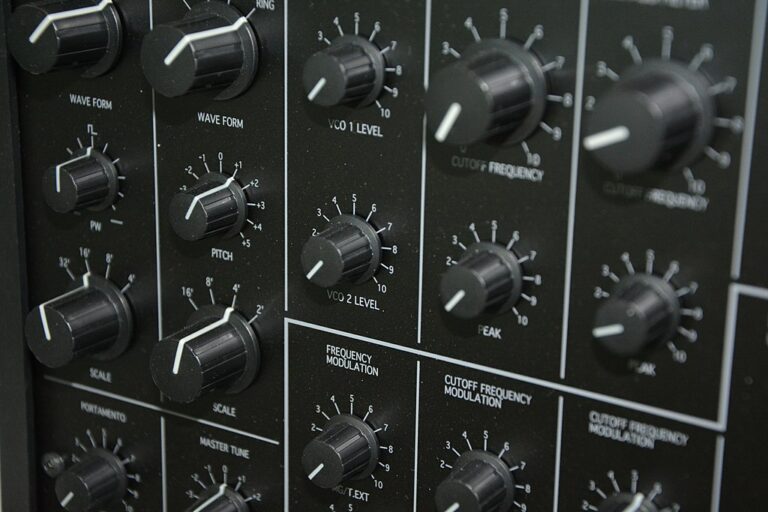
I bought my Korg PolySix in 1982 from Rhythm City in Atlanta, GA. Although I certainly liked the sound and features (especially having 6 voice polyphony), I have to admit the price was a major attraction. Here was a programmable polyphonic synth that I could actually afford! Other than having the battery for the onboard memory replaced in 2009 (I had read reports about these batteries eventually leaking and causing serious damage), I’ve never had any repair work done on my PolySix. I still use it today to write and record music, and examples of my PolySix in action can be found on my website