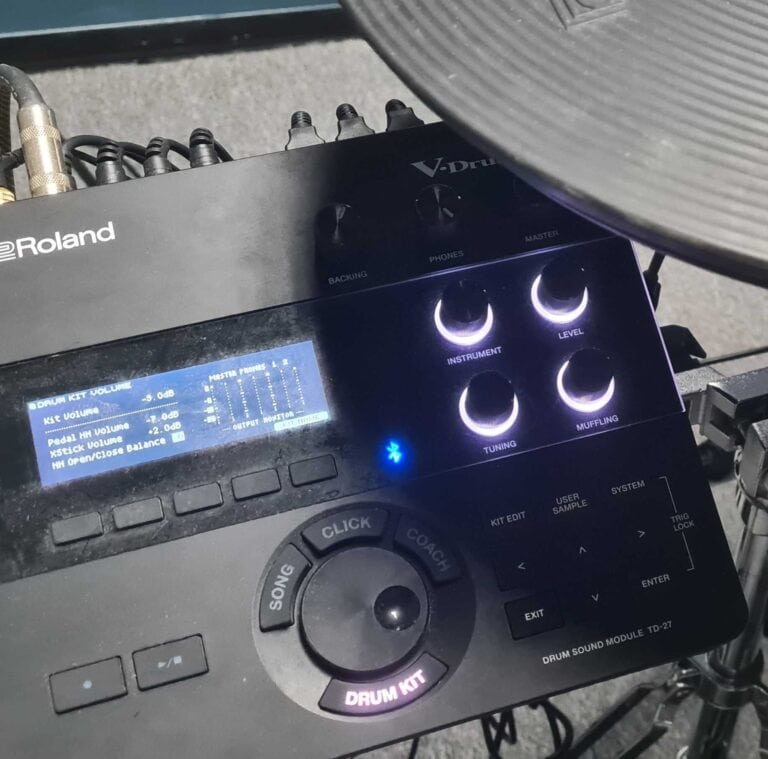
There are five classifications into which any instrument can be sorted.
- Membranophones
- Idiophones
- Chordophones
- Aerophones
- Electrophones
This is not to be confused with basic types of musical instruments, which include many various types! The list here is based on the Hornbostel-Sachs classification system, which is used to classify musical instruments based on how they produce sound.
1. Membranophones
Membranophones are drums. Membranophones range from the drum kit to timpani drums, taiko drums, the sogo and kidi of an Ewe drumming ensemble, and any other drum built out of a membrane stretched over some frame or body.
The size, materials, and construction of the body, the membrane material (and tension of the drumhead), and the method of striking the membrane (drum stick, mallet, hand, etc.) all play a significant role in what sort of tone color the drum will have.
Snare drums are not monolithic in sound, of course, as there are a variety of shell materials and drumheads.
Still, the thin metal wires stretched across the bottom head yield a peculiar resonance that defines the tone color of the snare drum, setting it apart from other drums like the tenor drum.
On the other hand, high-tension membranes sound brighter and more focused because a different set of overtones is emphasized.

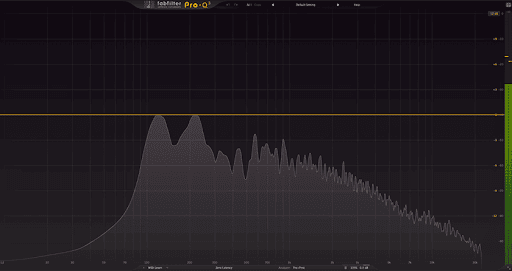
💡 Fun Fact: Drums that use animal skins produce warmer sounds because the lower tension of the membrane emphasizes specific overtones.
2. Idiophones
The classification of musical instruments can sometimes be confusing, especially when you realize some instruments with “drum” in the title are not membranophones but idiophones.
Idiophones are instruments in which sound is produced when the instrument itself vibrates.

The hand pan, also called a hang drum, is an idiophone, as is its cousin, the steel pan (also referred to as a steel drum).
Though laid out like a piano keyboard, the xylophone, glockenspiel, and marimba are also members of the idiophone family.
These instruments vary in timbre based on the materials from which they are constructed, the type of material with which they are struck, and whether there is a resonator in the instrument’s construction.
For example, the box, gourd, or shell of the kalimba mellows the instrument’s timbre, which would otherwise have a harsher, metallic sound.
Using a bow on a marimba has a different timbral effect from using soft mallets, and using soft mallets, in turn, has a different timbral effect from using hard mallets. These timbral effects go beyond the apparent differences in dynamic level or amplitude.


The same note of the marimba can be played with three different tone colors when performed with a bow (top), hard mallets (center), and soft mallets (bottom).
Speaking of metallic sound, cymbals are idiophones that produce so many overtones when struck that it is difficult to determine the fundamentals.
Tone colors similar to those produced by cymbals are called “noisy,” as they lack a clear fundamental pitch.

3. Chordophones
Chordophones are stringed instruments, whether the plucked strings of a lute, banjo, or guitar or the bowed strings of a cello or viola.
Like the mentioned instrument families, the materials out of which chordophones are made play a significant role in the tone color of that instrument.
Different types of strings also make all the difference in the sound of a guitar, for example, with nylon strings and steel strings having two distinct timbres.
The same could be said of the difference in sonority between gut strings and steel wound strings on the violin.
The quality and density of the wood used in making a violin can have legendary effects, as has been the case in the Stradivarius instruments.
💡 Did You Know: Some have suggested that Stradivarius instruments were constructed out of wood from trees stunted in growth and thus left unusually dense due to the Little Ice Age that occurred between the years 1645 and 1750.
Denser wood is more resonant, absorbing less sound and thus projecting more of it.
Something worth noting when observing timbral differences within an instrument family is that instruments capable of playing lower fundamental pitches typically produce more audible overtones than similar instruments with higher registration.
The cello, for example, produces more overtones with its low C than the viola produces with its low C.
A more overtone-heavy sound is often characterized as being “rich,”. In contrast, a sound with less in the way of overtones resonating could be called relatively “thin.”


4. Aerophones
Aerophones use air to create sound, requiring the instrumentalist to blow air into or across the instrument.
They can be categorized into woodwinds (flute, clarinet, oboe, etc.), brass (trumpet, tuba, trombone, etc.), and free reed instruments (organ, harmonica, and accordion).
The organ poses a fascinating example of an aerophone instrument, as it can produce a variety of tone colors or timbres.
The organist sitting at the console plays the manual keyboards and pedals but also pulls the various stops on the organ console associated with a particular rank of pipes assigned to particular sets of keys.
These stops activate or deactivate specific sets of pipes to produce a specific timber by laying varying harmonics on top of the fundamental associated with a keyboard key.
Essentially, the organ can mimic or approximate the timbres of other aerophones, like particular woodwind and brass instruments. This is done by assigning harmonic overtone patterns to each stop and naming that stop after the instrument.


A strong fundamental is paired with relatively weak overtones in both the case of a real oboe and the organ approximating the oboe.
This type of sound color is commonly called “nasal,” which can also be approximated using the human voice by “singing through one’s nose” in an unsupported voice.
5. Electrophones
Electrophones are electronic instruments, like synthesizers, that produce sound using electronic means like electronic circuits and signal processing.
Unlike acoustic instruments, electrophones rely on electricity and electronic components to generate sound rather than the materials they are made from.
Electrophones use sound synthesis to generate musical sounds or other audio waveforms electronically.
Sound synthesis is a fundamental aspect of
- Additive Synthesis: Additive synthesis starts with a sine wave, a pure tone building block for creating various sounds. A sine wave is a transparent pitch without harmonics or overtones, most closely approximated by a tuning fork. A sine wave has minimal tone color, but if you add another sine wave and a third and a fourth, you will start creating overtones, giving the sound more color. This is the concept behind additive synthesis, often used in software synths.
- Subtractive synthesis: Subtractive synthesis takes complex waveforms like a square or pulse wave and filters or ” subtracts” specific frequencies to shape the timber. You can selectively remove, strengthen, or neutralize particular overtones by processing the sound through a filter or series of filters. This is the basic concept behind subtractive synthesis, commonly used in analog synthesizers.
Both synthesis methods are invaluable tools for music producers and sound designers.
Thanks to technological advancements, modern electrophones offer amazing sound creation and manipulation capabilities, of which modern electrophones and synths are better than ever.
In fact, a skilled musician or producer with an understanding of tone color and a powerful synthesizer can approximate the sound of practically any instrument by applying synthesis principles.
Before You go…
Why not also brush up your knowledge on tone color? It goes hand in hand with everything you’ve learned in this article.