- And pro guide to the best acoustic guitars you can buy right now
- We’ve selected 15 models spanning a range of $300 to $3000
- Learn about the pros, cons, and best alternatives for each make/model
Most of us start our guitar journey on a beat-up pawn shop acoustic, a cheap hand-me-down, or something casually recommended by a friend.
Before you know it, you’ve honed your skills and saved enough cash for a “proper” acoustic guitar to augment your playing experience.
Being here, it’s safe to assume you’re ready for that remarkable moment.
Now, as someone who’s been playing and teaching guitar for nearly two decades (and has more musical instruments than friends), I had no reservations about taking up this challenging task of creating a comprehensive buying guide to the best acoustic guitars on the market.
So, if you have a decent budget and clear-cut musical taste, you’ve come to the right place.
A great acoustic guitar should be durable, fine-sounding, well-finished, and available at a price you can sensibly afford.
It should have suitable playability for your size and skill level, features relevant to your playing style, and sounds that complement your genre of choice.
With that blueprint, I’ve carefully selected the absolute finest acoustic guitars between $300 and $3000 (USD) to cater to all budgets and skill levels.
Our primary focus is mid-priced and top-tier models, so I’ve skipped guitars previously featured in our best beginner acoustic roundup.
Everything is conveniently arranged from lowest to highest price, and the individual product reviews break down the build quality, tone, and overall value you can expect for what you pay.
I’ve also summarized the pros and cons, while a best alternatives section branches out to acoustic guitars with matching or contrasting characters to expand your choice.
Now that the context is clear, let’s help you find the perfect acoustic guitar to add to your collection.
Best Acoustic Guitars: Our Top Picks
In the lower echelons of the acoustic guitar market, the Yamaha FG800 reigns supreme as the best solid-top dreadnought under $250.
Likewise, intermediate players seeking a “second” guitar will get the maximum bang from an acoustic or electro-acoustic Taylor Academy 10.
If you can spend around $1000, the bluegrass-oriented Alvarez MD70EBG showcases premium materials and hardware to output loud and lush rhythms.
Conversely, the Taylor 214CE-KSB is a fingerpicking gem that serves the whole Taylor experience without leaving you penniless.
Moving slightly upstream leads to the Martin 000-15M, a non-frilled all-rounder that champions the all-mahogany case better than anything else.
For roughly the same price, we’d recommend the Yamaha Red Label FGX5, a talented Japan-made marvel that ticks all boxes green.
Lastly, the Martin D-28 should be atop your list if you want the crème de la crème of acoustic guitars in 2023.
It transcends playing styles and genres and outputs noble clarity in every imaginable application. So, if you could own only one acoustic guitar, the D-28 would be it!
Here are the top fifteen candidates for the best acoustic guitars you can buy now.
- Yamaha FG800 (Best Value)
- Epiphone Hummingbird Studio
- Martin LXK2 Koa Little Martin
- Guild DS-240 Memoir
- Taylor Academy 10 (Best All-Rounder)
- Gretsch Rancher Falcon Jumbo 12-string
- Seagull S6 Cedar Original
- Alvarez Masterworks MDR70EBG (Best Mid-Tier)
- Taylor 214CE-K SB (Best For Fingerpicking)
- Martin 000-15M (Best Build Quality)
- Takamine Thinline TSP138C
- Yamaha Red Label FGX5 (Best Premium – Runner Up)
- Larrivee P-03 Mahogany
- Gibson J-45 Standard
- Martin D-28 (Best Premium)
- Yamaha Storia Series (Best Looks)
Best Acoustic Guitars: Product Reviews
1. Yamaha FG800
“Great sound and playability make this the best beginner acoustic guitar of all time.”
If you think finding a solid top acoustic guitar with top-notch sound and playability under $250 is impossible, Yamaha will shatter that notion.
The FG800, aptly dubbed the ‘King of Budget Dreads,’ is proof that you can find high-value gems even in the entry-level market, and it’s a shoo-in for the student to semi-pro stages of your music journey.
KEY SPECS:
- Non-cutaway dreadnought acoustic guitar, 25.5″ scale length
- Spruce top, Nato back and sides, and a walnut fingerboard
- Nato neck, 1.692″ nut width, 20 frets
- Natural gloss finish, no leftie model
- D’Addario 12-53, Gig bag sold separately
REVIEW
The Yamaha FG800 flashes carefully chosen tonewoods, a player-friendly neck profile, and a performance that surpasses its price tag.
The solid spruce and layered Nato combination, a signature of entry-level Yamaha guitars, is a winning formula on many levels.
At $229, this solid-top guitar feels like an absolute bargain for players drawn to a dread.
Your money is rewarded with great fit, finish, fretwork, and overall build quality. The factory setup, neck profile, and reliable hardware make the guitar enjoyable right out of the box.
Sound-wise, the FG800 delivers a robust projection with a brightness inherent to solid spruce tops.
Picked or strummed, the acoustic guitar can fill a room and stir musos gathered around bonfires. But keep in mind that it lacks onboard electronics for amped-up shenanigans.
VERDICT
If you’re hunting for a versatile dread at a bargain price, the Yamaha FG800 is one of the best cheap acoustic guitars to add to your collection.
It’ll serve you well on the couch, at campfires, or as an inexpensive backup that sounds more expensive than what you paid.
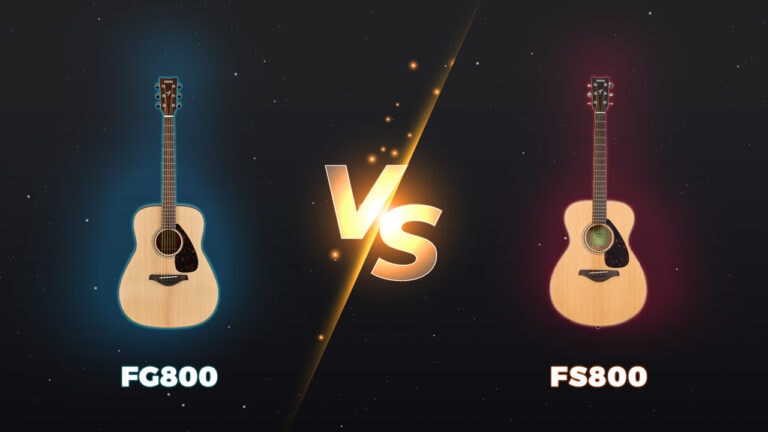
While we’re discussing the FG800, check out our guide to the key differences between the FG800 and FS800!
PROS
- Playable out of the box
- Punchy sound with bright tonality
- Works for most styles and genres
- Excellent value for money
CONS
- Small hands may struggle with the lower bout
- No electronics
BEST ALTERNATIVES
The Yamaha FS800 is the same guitar in a folk-size package, making it a better choice for smaller players.
However, we’d push you to consider the electro-acoustic Yamaha FG830, our top recommendation in a separate article on the best beginner acoustic guitars of 2023.
2. Epiphone Hummingbird Studio
“The best acoustic guitar under $500, more so if you need a retro dread for campfire chords.”
Epiphone has many triumphs in the mid-price market, and the Hummingbird Studio is one of them.
This acoustic guitar is a budget-friendly replica of its sought-after Gibson cousin, but a host of cost-cutting measures.
While it delivers excellent playability and sound quality, the Gibson-like styling is the primary reason for the acoustic guitar’s popularity.
KEY SPECS:
- Full-sized dreadnought acoustic guitar, 24.75″ scale length
- Solid spruce top, mahogany back and sides, pau ferro ‘board
- Mahogany neck, 1.693″ nut width, 20 frets
- Red Cherry Sunburst or Trans Ebony finish, no leftie model
- Gibson 12-53 strings, gig bag not included
REVIEW
Despite being in the most crowded acoustic guitar market, the Hummingbird has soared to success thanks to its ornate accouterments and pliable sound.
It fits the bill perfectly if you’re hunting for an instantly-recognizable acoustic guitar with a warm sound and onboard electronics.
This imposing dreadnought delivers solid projection, booming lows, and a rhythm-friendly sound.
The tuning stability and factory setup provide a reliable playing experience, while the thin, fast neck allows for effortless chording and fretting without straining your digits.
However, it’s a considerably large body shape, so we’d push readers to brush up on the key differences between a concert and dreadnought acoustic guitar before pulling the trigger.
For amplification purposes, the Hummingbird Studio utilizes an onboard Fishman Sonitone pickup, one of the most commonly used piezo systems at this price.
The resulting amped-up sound isn’t ultra-refined, but it’s perfectly serviceable for practice, busking, and café gigs.
VERDICT
There’s nothing quite like the Epiphone Hummingbird Studio on the market, especially at its price point.
It makes everything else look dowdy, and its striking looks will grab eyeballs wherever you go. But the durability and resonant sounds will also please your wallet and ears.
PROS
- Classic and distinctive design
- Excellent build quality
- Versatile and well-balanced tone
- Suitable for various performance settings
CONS
- There may be minor setup issues
- Electronics quality could be better
BEST ALTERNATIVES
Epiphone has a bunch of low-cost Gibson-inspired acoustic guitars like the Epiphone Dove, Epiphone J-45, and our favorite cutaway jumbo acoustic guitar – the Epiphone J-200EC Studio.
The Guild DS-240 (reviewed below) is also viable if you need Gibson-style dread.
3. Martin LXK2 Koa Little Martin
“The best acoustic guitar for traveling, busking, and pick-and-play applications.”
The Little Martin, marketed as a travel guitar, shot to fame partly because Ed Sheeran used it with looper pedals in the early days of his career.
However, there’s more to it than chance associations: portability, comfort, and impressive sound quality. Now, factor in the affordable $300 price, and it becomes a seductive choice for newcomers and travelers alike.
KEY SPECS:
- 14-fret acoustic guitar, 23″ scale
- Koa Wood HPL top, back, and sides with a Richlite fingerboard
- Stratabond neck, 1.687″ nut width, 20 frets
- Natural satin finish, left-handed model available
- Martin Lifespan 2.0 stock strings, gig bag included
REVIEW
With the LXK2, Martin proves it can ingeniously utilize low-cost materials like Richlite, stratabond, and Koa HPL to craft a high-quality instrument.
In fact, this road-ready acoustic guitar sounds great in most applications and is cheaper than the best guitaleles out there.
We’ve chosen the LXK2 over its spruce-topped cousin, the LX1, because HPL guitars react less to the environment, which matters if you travel.
Secondly, the patterned top looks striking and delivers more warmth and sustain, although that’s a matter of personal preference.
Of course, neither model can compete with the volume of a dread, but the LXK2’s projection is better than most of the travel-size guitars we’ve played.
Plus, the Fishman system allows you to hook the guitar to an acoustic guitar amp or PA for jamming, gigs, and busking.
VERDICT
The Martin LXK2 is a sweet deal if you want a compact, rugged acoustic guitar with a killer amplified sound.
The fact that it’s cheaper than top-rated travel guitars like the Taylor GS Mini and Yamaha APXT2 makes it a fabulous guitar choice for newcomers and nomads.
PROS
- Martin quality at an affordable price
- Sounds great when amplified
- Top choice for students and smaller players
- Gig bag included
CONS
- Not as loud as a full-size acoustic
- You’ll trade some tone for ease-of-use
BEST ALTERNATIVES
The Yamaha CSF3M and Taylor GS Mini are viable electro-acoustic alternatives if you want a scaled-down dread.
Guitar beginners who still have some growing to do can explore more options in our separate guide to the best 3/4 acoustic guitars for all budgets.
4. Guild DS-240 Memoir
“Elegant and incredibly playable, this is one of the best acoustics around the $500 mark.”
Guild’s Westerly Series is chock-full of retro-looking guitars with a ’60s folk styling and sound, and the DS-240 is one of them.
This 14-fret slope-D takes inspiration from the Gibson J-45 and lives up to expectations for the price.
While we’d still pick a Gibson over it, the DS-240 is undoubtedly one the best acoustic guitars for players upgrading from an entry-level model.
KEY SPECS:
- Round shoulder dread, 24.75″ scale
- Solid spruce top, mahogany back and sides, pau ferro fingerboard
- Mahogany neck, 1.68″ nut width, 20 frets
- Natural satin finish, left-handed model available
- D’Addario 12-53 strings, gig bag sold separately
REVIEW
Despite its overseas origin and raddled appearance, the Guild DS-240 is a lot of acoustic guitar for the money.
This round-shouldered dreadnought delivers effortless playability and boasts a tonal profile that perfectly suits the country, folk, and bluegrass idiom.
The DS-240 has low-medium action and a distinctly warm, worn-in sound, best described as a full-bodied tone with cavernous lows, a strong midrange, and loads of headroom.
If you’re up to date with the anatomy of the acoustic guitar, you’ll notice the large body size, rounded shoulders, and bowl-shaped back contribute to the loud volume and fullness.
In other words, the DS-240 is an excellent acoustic guitar for rhythm playing, and a few low-cost upgrades can propel it into a different class.
However, it lacks onboard electronics, so factor in the cost of a soundhole pickup if you plan to plug it into an amp or PA system.
VERDICT
The Guild DS-240 is one of the top acoustic guitars for players seeking a throaty slope-D that won’t break the bank.
Its voice and virtues work in various dreadnought contexts, but it comes to life with open tunings, passionate strumming, and flat-picking applications.
PROS
- Solid top and stylish retro design
- Full-bodied tone with a punchy midrange
- Best suited for folk, country, and bluegrass genres
- Excellent value for money
CONS
- Bass-heavy sound has limitations
- No electronics system
BEST ALTERNATIVES
The Epiphone J-45 is the official low-cost replica of the J-45, making it an obvious alternative to the DS-240, although it costs more and lacks a solid top.
On the other hand, the Guild Westerly series also has a parlor-style option, the Guild P-240, for fingerstyle aficionados.
5. Taylor Academy 10
“A top-rated acoustic guitar from Taylor’s entry-level line for budding guitarists.”
There’s a sharp rise in the quality of acoustic guitars in the mid-price market, and it’s easy to find yourself at sea comparing models from top guitar brands like Alvarez, Yamaha, Martin, and Taylor.
Although any make/model can be an excellent guitar choice, we’d push you to consider the Taylor Academy series if your budget falls in the $500 to $750 range.
KEY SPECS:
- Dreadnought acoustic guitar, 24.875″ scale
- Solid Sitka spruce top, sapele back and sides, ebony ‘board
- Mahogany neck, 1.687″ nut width, 20 frets
- Natural varnish finish, left-handed model available
- Elixir PB Lights, Gig bag included
REVIEW
Taylor’s best options for beginners for many years were two travel acoustic guitars – the Baby Taylor and GS Mini.
In 2017, the brand unveiled its first and only entry-level lineup to affirm its commitment to players with limited budgets, leading to the Academy 10 & 12 models.
In many aspects, this full-size dread is a true all-rounder, capable of handling strumming, fingerpicking, and everything in between.
Its welcoming action can please beginners, while the finer details, like a beveled armrest and ebony fingerboard, will appeal to seasoned players.
Despite the relatively low price, the Academy 10 isn’t divorced from Taylor’s superior build quality and sonic hallmarks.
The guitar outputs a bright and resonant character with ample volume, projection, and crystal-clear definition across the frequency spectrum.
The acoustic-electric version – Taylor Academy 10e – is fitted with the ES-B pickup and preamp system to deliver rich details through an amp or PA. The plugged-in sound retains the guitar’s overall character, although it lacks a bass control knob to fine-tune the response.
VERDICT
The Taylor Academy 10 is a hot proposition for well-heeled students and a terrific trade-up for newly calloused digits.
Its build, playability, and plugged-in performance surpass most models in this price range, with the exception of the Seagull S6 Original.
PROS
- Excellent build quality and playability.
- Beveled armrest and ebony fingerboard
- Well-balanced sound with a touch of brightness
- Versatile use, ideal for strumming and fingerpicking
CONS
- No bass control knob to fine-tune the low-end response
- You can find all-solid acoustic guitars at this price point
BEST ALTERNATIVES
The Martin D-X2E is the chief rival of the Taylor Academy series. The Seagull S6 also makes a strong case for a similar price, though the electro version is more expensive.
All three are top-notch, and the best guitar choice depends on your preferred look and sound.
P.S. – The Academy 10e was our top pick in the best low-action acoustic guitars of 2023.
6. Gretsch Rancher Falcon Jumbo 12-string
“The best 12-string acoustic guitar if you want 12 strings for three figures.”
It’s nigh-on impossible to take your eyes or ears off a Gretsch Jumbo in action, especially when it’s the majestic 12-string version.
Behold a bold-voiced 12-ver with a solid spruce top, maple body, laurel fingerboard, and massive lower bout.
It’s one of the best acoustic guitars in the mid-priced 12-string realm, especially if you enjoy the swanky Gretsch styling.
KEY SPECS:
- Jumbo cutaway 12-string acoustic guitar, 25″ scale
- Solid spruce top, maple back and sides, laurel’ board
- Maple neck, 1.875″ nut width, 21 frets
- Natural varnish finish, no left-handed model
- D’Addario EJ38 Strings, no gig bag
REVIEW
The Rancher Falcon is far from subtle, with its white polyester finish, triangular soundhole, glitzy binding, and gold pickguard exuding a Vegas-style vibe.
Luckily, the 12-string acoustic guitar is also available in black, white, and a less attention-seeking sunrise red model.
Regardless of garb, this 12-string pays homage to the iconic ’50s Gretsch Rancher guitars while incorporating modern tweaks like a compensated saddle and scalloped X-bracing.
Its thin neck delivers smooth playability, but the massive bout will challenge younger arms.
As expected, the 12-ver outputs a bold, bright tone with punchy lows, fat mids, and shimmering highs.
The volume, projection, and sustain are precisely what you’d expect from this size, and there’s a Fishman system with onboard controls to fine-tune the amplified sound.
VERDICT
Don’t mistake the Gretsch Rancher as a novelty or ostentatious statement. It’s a stage-ready 12-string acoustic guitar that delivers the goods at a cut-throat price.
But this imposing beast has a 17″ lower bout and towering depth, so it may not be the best choice for smaller players.
PROS
- Uniquely striking visual appeal
- Solid top plus enduring build
- Rich, chiming sound
- Onboard electronics for stage use
CONS
- Off-kilter looks are not for everyone
- Too big for smaller players
BEST ALTERNATIVES
Players with understated taste can consider the Martin D-X2E and Takamine GJ72CE – two best-selling models in the same price range. If you want to spend less, the Guild F-2512E has a stellar reputation among 12-string acoustic guitars around the $500 mark.
7. Seagull S6 Cedar Original
“Godin’s finely-crafted acoustic guitar plays like butter and smells like Canada.”
The Seagull S6 Original is one of the best-selling acoustic guitars from Godin’s Quebec factory and is an exemplary dread for all styles of music.
The lineup features cutaway, non-cutaway, acoustic, electro-acoustic, and a mid-priced 12-ver. Many are available with a solid spruce or cedar top and 3-layer Canadian wild cherry back and sides.
KEY SPECS:
- Non-Cutaway dreadnought acoustic guitar, 25.5-inch scale
- Solid cedar top, wild cherry back and sides, rosewood fingerboard
- Silver Leaf Maple neck, 1.69″ nut width, 20 frets
- Natural or vintage sunburst finish, leftie version available
- Godin 12-53 strings, case sold separately
REVIEW
The Seagull S6 is a curious blend of old and new, combining traditional timbers and construction with clever tweaks like a compound curve top for better projection, a tapered headstock for tuning stability, and a modified dreadnought body shape for enhanced clarity.
Subsequently, it turns out to be a reliable acoustic guitar with excellent playability and sound quality.
The resonance and project are on the dreadnought button, but the solid cedar top is a standout feature, adding a distinctly sweet warmth to the overall tone.
The Seagull S6 can fill a room with sunny chords or purr tunefully when subjected to nuanced picking.
The dynamic range and tonal profile make it an ideal acoustic guitar for songwriters or mellow genres, and the 1.8″ wide nut yields a homely feel for fingerstyle players.
The S6 is the perfect ‘second’ guitar or trade-up from all-laminate models. Gigging musicians will benefit from the electro-acoustic version that adds $100 to the billing.
However, it comes with a Fishman Presys II electronics system to justify the price difference.
VERDICT
The Seagull S6 claims a mid-market sweet spot with its high-quality craftsmanship and top-notch sound. The price is pretty good, too. However, it faces serious competition at the price point and often gets overshadowed by big-name brands like Martin and Taylor.
PROS
- High-quality Canadian craftsmanship
- Clever tweaks to improve performance
- One of the best all-around acoustic guitars
- Effortless playability for most people
CONS
- Non-frilled and understated looks
- Cedar tops are not for everyone
BEST ALTERNATIVES
The Seagull Entourage and Coastline series acoustic guitars deliver a solid quality-to-price ratio if you can extend your budget slightly.
The vintage-styled Guild D-140 and modern-looking Takamine GN93CE NEX are the best similarly-priced alternatives from other guitar brands.
8. Alvarez Masterworks MD70EBG
“One of the best acoustic guitars for country, bluegrass, and percussive rhythms.”
The Alvarez MD70EBG is a value-packed slope-D acoustic guitar, best known for outputting organic tones in a country dialect.
Its upmarket appeal is a sum of premium tonewoods, high-end hardware, and visual and sonic features that honor the bluegrass tradition.
The guitar’s classic proportions and easy playability also lend well to percussive playing styles.
KEY SPECS:
- Dreadnought acoustic-electric guitar, 25.5-inch scale
- AAA Sitka spruce top, rosewood back and sides, laurel’ board
- Silver Leaf Maple neck, 1.75″ nut width, 21 frets
- Natural or vintage sunburst finish, leftie version available
- LR Baggs VTC element system
- D’Addario 12-53 strings, Softshell case
REVIEW
While most $1000 acoustic guitars make concessions to keep costs manageable, the MD70EBG sets up big expectations with premier materials, classic adornments, and signature trimmings like a slotted headstock, W-shaped bridge, and bone nut.
This dread flashes old-school cosmetics like an abalone 12th fret inlay, open-gear tuners, and a pre-war-style sunburst finish.
Its mahogany-on-laurel neck has a compound profile for easy chording, and the wide nut is tailor-made for thumb picking and playing fingerstyle.
Despite the side, the guitar’s slim neck provides comfortable playability, while the wide nut, large frets, and generous string spacing positively impact the feel. Likewise, the scale is as long as it gets without entering baritone acoustic guitar territory.
The MRD70’s voice has a slant for percussive playing, meaning it has a dry, bass-heavy response, shimmering highs, and intense, well-defined fundamental notes.
Moreover, there’s little to fault about the organic-sounding amplified tones of the LR Baggs system.
VERDICT
Dubbed the ‘Bluegrass Bellower,’ the Alvarez MD70EBG is an expertly-crafted acoustic guitar with top-grade materials, classic construction, and rich tones.
It’s one of the best acoustic guitars for Americana, percussive playing, or any style that doesn’t rely on top-end sparkle.
PROS
- Solid wood guitar with a AAA Sitka spruce top
- Fantastic sound and playability
- LR Baggs Element VTC pickup
- Softshell case included
CONS
- The guitar has a country and bluegrass bent
BEST ALTERNATIVES
A Blueridge BR-180 or Martin D-18 would be a no-brainer for the bluegrass enthusiast, although the latter costs much more than the MD70EBG.
Alternatively, the Epiphone Dove PRO and Alvarez AD60 could be the best budget alternatives along the same lines.
P.S. – This model was our premium pick in the article covering the best Alvarez guitars.
9. Taylor 214CE-K SB
“Sweet and sparkly, this is the best acoustic guitar from the mid-market Taylor lineup.”
The 200 Series acoustic guitars have a simple formula for success – a full Taylor experience at an affordable price.
They are available in various timber combos and hues to help you find the perfect ‘first’ Taylor acoustic.
Then, if the craftsmanship and sparkly sounds touch base, as they invariably do, you’re free to become a brand loyalist and splurge on top-end models.
KEY SPECS:
- Grand Auditorium shape with a Venetian cutaway, 25.5″ scale
- Solid Sitka spruce top, layered Koa body, ebony ‘board
- Mahogany neck, 1.687″ but 20 frets
- 25.5″ scale length. 1.68″ nut width, 20 frets
- Taylor ES2 pickup and preamp system
- Shaded Edgeburst finish, Left handed model available
- Elixir PB Light Strings, Deluxe gig bag included
REVIEW
Three qualities mark the 214CE as a compelling package for gigging musicians. First, it’s a classy-looking acoustic guitar with standard-bearing build quality.
Second, its body shape, proportions, and neck profile work for players of all stature, styles, and skill levels.
But that’s not all; the Taylor has a modern tonal profile that sits beautifully in a mix.
It delivers a venerable dynamic range and noble degrees of clarity and balance. Unplugged or amplified, everything is crisp and laced with a top-end shimmer that defines the signature Taylor sound.
The ES2 system is another standout feature of this acoustic guitar, and it seamlessly translates the instrument’s natural sound to the stage.
Gigging pros will relish the guitar’s ability to render the dynamics of passionate strumming, tasty licks, and delicate passages.
VERDICT
While you can find far superior Taylor guitars on the market, most amount to wanton opulence for prudent musicians.
The Taylor 214CE-K SB, on the other hand, is the best and cheapest way to steep your tunes in the authentic Taylor sound without blowing your budget.
PROS
- Great for strumming and fingerstyle arrangements
- Articulate sounds with a crisp and bright tonality
- Stage-ready and a plugged-in pleasure
- Best affordable option in the Taylor lineup
CONS
- No preamp bass control knob
- Laminate back and sides
BEST ALTERNATIVES
Breedlove has over a dozen concert-sized acoustic-electric guitars in this price range.
Consider the Breedlove Eco Pursuit or Organic Performer Pro. However, remember that Breedlove acoustic guitars are more mid-focused and less “sparkly” than Taylors.
10. Martin 000-15M
This versatile all-rounder is the affable protagonist of ‘When Martin Met Mahogany.’
Martin hawks three M-series guitars – a 000, 00, and a dreadnought – for players who cite the law of diminishing returns to not spend $3k+ on an acoustic.
Well, you can get this non-frilled 000-15M for half of that and never look back.
Whatever the guitar lacks in bells and whistles, it makes up for its expressive character, responsive handling, and lush, characterful sound.
KEY SPECS:
- 14-fret 000 acoustic guitar, 25.4-inch scale
- All-mahogany construction, rosewood fingerboard
- Solid mahogany neck, 1.6875″ nut width, 20 frets
- Aged or natural finish, leftie version available
- Lifespan 2.0 strings, Softshell case included
REVIEW
You wouldn’t be the first to mistake the 000-15M as the best expression of Martin’s artistry until you notice how many premium acoustic guitars sit above it.
However, what sets the guitar apart is the pure and unpretentious nature that lets the mahogany and workmanship do the talking.
The 00015M skips the flashy finish, decorative inlays, and fancy binding, instead focusing on what truly matters – stately timbers, smooth playability, and exceptional built quality. Its dark-stained finish, low-key rosette, and streamlined design leave a memorable impression.
Designed with a modified oval neck and a narrower nut (43mm) compared to the typical 44.5mm proportions, the 00015M will appeal to strummers and fingerpickers.
However, the 14-fret design only allows for comfortable access to the first-position licks at the 12th fret.
The 000-15 complements vocals beautifully and shines with open tunings, bluesy riffs, and the shifting wails of glass guitar slides. However, the body size does limit its overall volume, and the guitar isn’t crafted for the unplugged midrange honk you hear in raspy Delta blues records.
VERDICT
Even with the barest pro-standard essentials, the 000-15M bears testament to Martin’s peerless artistry and is a guitar every player should experience.
While its rustic demeanor may or may not captivate you, it’s undeniably the best all-mahogany acoustic guitar I’ve ever played.
PROS
- Top-class materials and build quality
- Comfortable size and smooth playability
- Exceptional resonance and projection
- The great all-around choice for strumming and picking
- Hardshell case included
CONS
- All-mahogany won’t appeal to everyone
- Lower volume and projection than a dreadnought
BEST ALTERNATIVES
It’s tricky – and somewhat pointless – to suggest alternatives for an acoustic guitar with no negatives.
However, the Martin D-15M and 00-15M are equally impressive instruments in their weight class, with an evenly balanced sound and noble clarity across the tonal spectrum.
P.S. – In a previous article, we compared the Martin 00 vs. 000 body sizes.
11. Takamine Thinline TSP138C
The best thin body acoustic guitar for touring musicians and electric guitar players.”
This ultra-slim Takamine is for players who refuse to schlep a jumbo or dreadnought on stage.
Despite the streamlined proportions, it delivers easy playability with dynamic response and uncompromised sound.
While tone purists won’t endorse it, electric players will adore the slender body, fast neck, 42mm nut width, and beautiful amped-up sound.
KEY SPECS:
- Thinline cutaway acoustic guitar, 24.75″ scale
- Sapele top, spruce back and sides, rosewood ‘board
- Mahogany neck, 1.653″ nut width, 21 frets
- Takamine CT-3N electronics
- Natural, Tobacco Sunburst or Tea burst finish
- D’Addario 12-53 strings, Soft case included
REVIEW
The TSP138C is a slim, lightweight, and superb acoustic guitar for stage use, especially for electric guitarists who play a few acoustic songs in their set.
It marries classic tonewoods with first-class appointments like Gotoh tuners, a bone nut, and a rosewood fingerboard.
The Takamine’s 60mm body depth is feedback-resistant and easier to maneuver than a bulky full-sized acoustic guitar.
Sound-wise, it turns over a balanced response with admirable clarity and definition.
Even acoustically, the chords have more volume and sustain than you’d expect from the design, but there’s a lack of roundedness when you play the guitar fingerstyle.
We also love the proprietary CT-3N electronics – specially designed for this series – that output stage-ready amplified sound and capture the guitar’s resonance well.
Moreover, there’s a responsive 3-band EQ to tone sculpt and a notch filter to avoid howling feedback on stage.
VERDICT
The Takamine TSP138C is a purpose-driven acoustic guitar designed for onstage use and rehearsals with a loud band. Its electric-guitar-like feel, feedback-resistant build, and ability to sit well in any live mix make it one of the best electro-acoustic guitars in the thin-line realm.
PROS
- Outstanding build quality
- Playability is exactly as advertised
- Amplified sounds are fabulous
- The next best thing to an electric guitar
CONS
- Not the best choice for playing fingerstyle
- Slightly prone to neck dive
BEST ALTERNATIVES:
Yamaha has a top-notch range of slender acoustic guitars, though the Takamine models are slightly thinner. Players with modest budgets can consider the PRS SE A50 Angelus. Alternatively, you can move upstream to the Taylor T5z Classic (or Pro).
P.S. – Explore more options in our separate article on the best thin-body acoustic guitars.
12. Yamaha Red Label FGX5
“A dreadnought of value with top-shelf materials and fabulous electronics.”
The original Red Label acoustics went for a bomb in the used market, and Yamaha capitalized on their status by launching a reissue on the 50th anniversary of the iconic lineage. The subsequent model – a Japan-made Yamaha FG5 – received a bunch of tweaks and upgrades that turned it into one of the best acoustic guitars around the $1500 mark.
KEY SPECS:
- Dreadnought acoustic guitar, 24.75″ scale
- Sitka spruce top, mahogany back and sides, ebony ‘board
- Mahogany neck, 1.75″ nut width, 20 frets
- Yamaha Atmos electronics system
- Natural finish, no leftie model
- Elixir Nanoweb 80/20 strings, Hardshell case included
REVIEW
The FG5 flashes a Sitka spruce top with Acoustic Resonance Enhancement (ARE), indicating the wood is torrefied to give the guitar a played-in and matured tone. The cooked top is paired with solid mahogany back and sides to add more warmth to the sonic formula.
The bounty continues with an African mahogany neck, bone nut/saddle, ebony fingerboard, Gotoh tuners, and Atmosfeel electronics. The guitar ships with stock Elixir Nanoweb 80/20s and includes a hardshell case, making it one of the best acoustic guitar deals in value.
Coming to the meat and drinks, the acoustic guitar is delightfully playable and pliable, and strumming it reveals a noble spread of bass, mids, and treble. Fingerpicked notes ring with clarity, and chords have a lush shimmer because the treble is slightly on the light side.
Lastly, the Atmosfeel electronics are arguably the best part of the acoustic guitar. This patented system combines a piezo under-saddle, an internal mic, and a sheet sensor to create a 3D sound. The preamp features controls for mic blend, bass EQ, and master volume.
VERDICT
We’d recommend the Yamaha FG5 as one of the best all-purpose acoustic guitars for players drawn to a dreadnought. Its tonal versatility conforms to various styles, and the accessible price point makes it a wise future-proof investment for beginners and semi-pros alike.
PROS
- First-rate materials and craftsmanship
- Engaging playability and versatile sound
- Top-notch pickup and preamp system
- Excellent value for money
CONS
- Nothing a good setup can’t fix
BEST ALTERNATIVES:
The Yamaha A5M ARE has a cutaway design with an SRT2 system, making it the best alternative to the FGX5. The exact amount of money can also get you a Martin D-12E, but the construction techniques and spruce-meets-sapele combo yield very different sounds.
13. Larrivee P-03 Mahogany
“In a parallel parlor universe, good things come in small packages with big price tags.”
The Larrivee P-03 is one of the best acoustic guitars in the parlor domain, with the potential to double as a high-quality travel guitar. It’s a stellar blend of top-drawer materials, first-rate craftsmanship, and a long list of impressive specs. Most players who witness its easy action and dynamic response to playing agree that it sounds better than higher-priced rivals.
KEY SPECS:
- Parlor acoustic guitar, 24″ scale
- Sitka spruce top, mahogany back and sides, ebony ‘board
- Mahogany neck, 1.75″ nut width, 18 frets
- Natural finish, no leftie model
- D’Addario 13-56 strings, Hardshell case included
REVIEW
The stalwart solid-wood parlor is famed for its classic construction, clean aesthetics, and bold speaking voice. It features a Canadian Sitka spruce, mahogany back, and sides with traditional construction, including X-bracing, a dovetail neck joint, and a bound ebony ‘board.
From glueless joints to kerfed linings and bound edges, the P-03 boasts a flawless fit and finish. Based on the short scale, wide nut (1.75″), low tension, and generous string spacing, there’s top-notch fingerpicking potential for indie, pop, folk, and blues players.
Like all good parlor guitars, the Larrivee sounds bright and clear, with a tight low-end, a throaty mid-range, and cutting highs. The P-03’s intimate voice exhibits punch with definition, but the guitar is equally capable of sweet-easy tunes when the songwriting calls for it.
The P-03 is also available in a spruce-rosewood avatar, but neither model packs any electronic gubbins. Luckily, parlors with this level of quality sound are cultured in front of studio microphones, and they’re always game to howl at the touch of a bottleneck guitar slide.
VERDICT
The Larrivee P-03 is an expertly crafted fingerstyle gem with premium timbers and hardware. While it can handle mild-mannered strumming, its intimate voice and wide nut are perfect for traveling troubadours and passionate pickers, especially those with a blues bent.
PROS
- Solid wood construction
- High level of craftsmanship
- Intimate, well-balanced voice
- Enjoyable to play for extended periods
- Perfect for fingerstyle blues and folk players
CONS
- Not an accessible price for most players
14. Gibson J-45 Standard
“With a storied soul and sound, this is the best acoustic guitar for dreadnought enthusiasts.”
The coveted Gibson J-45 is one of the finest-sounding acoustic guitars in the dreadnought realm. Priced and designed for professionals, this hard-wearing workhorse boasts top-of-the-line appointments like ‘cooked’ tone woods, period-correct tuners, rolled fingerboard edges, a bone nut/saddle, and special ‘finish’ oils to preserve the wood’s natural vibrancy.
KEY SPECS:
- Round shoulder dreadnought, 24.75″ scale
- Sitka spruce top, mahogany back and sides, rosewood ‘board
- Mahogany neck, 1.725″ nut width, 20 frets
- LR Baggs VTC Under Saddle Pickup
- Natural or Vintage Sunburst, leftie model available
- Gibson 12-53 strings, Hardshell case included
REVIEW
The J-45 epitomizes premium dreadnought heritage, and no other acoustic guitar – from any brand or era – can rival its storied history and universal popularity. Legendary musicians like Bruce Springsteen, James Taylor, and Bob Dylan have used this acoustic guitar.
The guitar’s universal appeal is fuelled by its winning combo of spruce-meets-mahogany tonewoods and an admirable dynamic range that fits various music genres. Its air of greatness has been a part of countless pop, rock, folk, blues, country, and bluegrass records.
As for the tone, the J-45 is famed for its balanced expression with rich lows, excellent projection, and an overall ‘woody’ character. If you describe your dream sound as full-bodied, smooth, earthy, and velvety, this acoustic guitar will leave you (and the room you play to) ecstatic.
Like most USA-made Gibson acoustic guitars, the J-45 is kitted with a performance-ready LR Baggs system for amped-up employment. The guitar exhibits superior clarity and balance throughout the tonal spectrum, whether plugged in, unplugged, or reinforced with reverb pedals.
VERDICT
The Gibson J-45 is one of the best acoustic guitars for touring musicians and studio pros. It’ll be an enduring instrument that’ll serve you until you’ve cut your last record, and witnessing its sonic finesse instantly explains why Gibson guitars are so expensive.
BEST ALTERNATIVES:
The Gibson J-45 is available in other hues and timber combos, including a Studio, Deluxe, and ’50 original model. Alternatively, guitar players on a budget can consider the USA-made Gibson G-45 or move further downstream to the Epiphone J-45 made overseas.
15. Martin D-28
“Empty your pockets, fill your palms, and never look for another acoustic guitar again.”
Martin acoustic guitars are legendary, and every player drools at the possibility of an aristocratic model at some point. The D-28 epitomizes the dreadnought paradigm, setting benchmarks other manufacturers attempt to overthrow in vain. It has near-perfect everything and makes for a fitting finale to end this roundup of the best acoustic guitars money can buy.
KEY SPECS:
- Full-size dreadnought, 25.4″ scale
- Spruce top, rosewood back and sides, ebony fingerboard
- Select hardwood neck, 1.75″ nut width, 20 frets
- Natural finish, leftie model available
- Lifespan 2.0 strings, Hardshell case included
REVIEW
The build quality, playability, and sounds of a Martin D-28 are precisely what you’d expect from the world’s most proven and high-toned acoustic guitar. Everyone who plays it has a few superlatives to contribute, except players who want a Taylor or Gibson logo on the headstock.
In fact, the D-28 is a revered time capsule, and its cultured tones have served the likes of Elvis, Joan Baez, the Avett Brothers, and John Mayer. It sounds big, complex, crisp, and balanced, with a tight bass response and sustain that doesn’t degrade the sound into mush
The acoustic guitar makes strumming sounds terrific, with note separation and definition being at a premium across flashy riffs, nippy runs, and nuanced fingerstyle passages. Everything is regally balanced, rings with the correct weight, and mindful of the guitar player’s intentions.
VERDICT
No other acoustic guitar commands more respect at the dreadnaught table than a D-28, except for a Martin D-45 that costs thrice as much. Still, the D-28 is no less of a master class in tonewood selection, construction, and the archetypal room-filling dreadnought sound.
BEST ALTERNATIVES:
Oddly, the Yamaha Red Label FGX5 is an outrageous deal at half the price. It has slightly smaller proportions and a mahogany body instead of rosewood, but it also has the highly-acclaimed Yamaha Atmosfeel electronics system.
“A fresh take on the singer-songwriter guitar with style that matches its substance.”
If you’ve been searching for an acoustic that balances Instagram-worthy aesthetics with genuine musical capability, Yamaha’s Storia III delivers both without compromise.
The latest addition to Yamaha’s design-forward Storia line proves that visually striking guitars can also be serious instruments, offering a playing experience that will inspire both your songwriting and your social media feed.
KEY SPECS:
- Concert body shape with subtle waist and comfortable depth
- Solid Sitka spruce top with mahogany back and sides
- Slim taper nato neck with 25″ scale length
- 20-fret walnut fingerboard with 1.69″ nut width
- Passive undersaddle piezo with discrete soundhole-mounted controls
- Striking matte Mint Blue finish with brass-colored hardware
- Includes premium padded gig bag
16. Yamaha story Series (Best Looks)
REVIEW
Some say looks don’t count. However, the Storia III (and the rest of the series’ lineup) expertly balances form and function with its eye-catching design and surprisingly versatile voice.
The solid spruce top paired with mahogany delivers the perfect balance of articulation and warmth. Fingerpickers will appreciate the note definition, while strummers will enjoy the balanced EQ that sits perfectly in a mix without requiring any processing.
At just shy of $650, the Storia III represents impressive value when you consider the solid-wood construction, reliable electronics, and premium appointments. The brass-colored hardware against the matte Mint Blue finish creates a distinct aesthetic that stands out on stage.
Playability is a standout feature, with the slimmer neck profile and smooth satin finish making complex chord voicings and transitions effortless. The factory setup is spot-on, with comfortable action and excellent intonation across the fingerboard.
Plugged in, the passive piezo system delivers a natural sound that requires minimal EQ adjustments, while the discreet controls maintain the guitar’s clean visual lines without sacrificing functionality.
VERDICT
The Yamaha Storia III proves that you don’t need to choose between Instagram appeal and musical substance. This is a serious instrument that happens to look stunning – perfect for the modern performer who wants to make both sonic and visual statements.
Whether you’re a coffee shop performer, content creator, or bedroom songwriter, the Storia III delivers a playing experience and sound quality that will inspire your music while its distinctive aesthetic ensures you’ll stand out from the crowd.
PROS
- Striking visual design that photographs beautifully
- Balanced, versatile tone suitable for multiple genres
- Comfortable neck profile and excellent playability
- High-quality electronics with discreet implementation
- Outstanding build quality and attention to detail
CONS
- Limited finish options in the lineup
- Passive electronics require a preamp for best results
- May be too stylized for traditionalists
BEST ALTERNATIVES
For those seeking similar quality in a more traditional package, the Taylor GS Mini offers comparable portability with classic aesthetics.
If you’re drawn to unique designs but need more output, consider the Fender Acoustasonic Player Telecaster, which brings expanded sonic options at a similar price point.
Best Acoustic Guitars: Buying Advice
Acoustic guitars are subjective, and your decision to purchase the best one is driven by intended use, personal preference, and a specific budget. However, a few things apply to every purchase, and the following sections cover what to look out for when shopping.
Build Quality
A good acoustic guitar should tick certain boxes green and build quality in one of them because it ensures your instrument is durable and reliable. The build quality is generally proportional to price, but models like the FG800 prove cheap guitars can be built to a high standard.
Either way, always check the fit and finish of a new instrument to ensure everything is up to scratch. Watch for sharp frets, dead spots, iffy joint work, and blemishes. Most pro guitars have a factory setup and should exhibit good tuning stability and intonation.
Playability
Good playability implies an acoustic guitar is comfortable to play, both sitting and standing. It’s a sum of how the neck profile, nut width, fingerboard radius, and body shape interact with the player. A part of it is subjective and hinged on your stature, playing style, and skill level.
However, many premium acoustic guitars offer playability enhancements like curved fretboard edges, beveled armrests, compound radius necks, and modified body shapes. You can also use reliable reviews to gauge the playability of an acoustic guitar you plan to purchase.
Tonewoods
Wood – solid or laminate – constitutes 90% of an acoustic guitar’s construction and plays a major role in its sound. Whether it is cedar, spruce, rosewood, walnut, or mahogany, each type of wood has innate characteristics that influence how an acoustic guitar sounds.
But the “best” tonewood conversation is nuanced and highly subjective, so we’ll not get into that for now. If you want to play it safe, pick classic timber combinations like spruce-rosewood, spruce-sapele, cedar-mahogany, spruce-mahogany, and all mahogany acoustic guitars.
Some brands use cheaper but sonically similar alternatives like Okume and Nato, and others employ exotic substitutes with unique characters, like Koa and Pink ivory. Researching the pros and cons of the tonewoods commonly used for the top, back, and sides is worthwhile.
Hardware
Nerds and pros notwithstanding, most players underestimate how hardware impacts an acoustic guitar. Things like the tuning pegs, bracing, and bridge directly or indirectly influences the projection, sustain, tuning stability, and other aspects of your playing experience.
Imaginably, entry-level guitars use mediocre hardware to cut costs, improving the hardware quality as you move upstream. From a buyer’s perspective, picking a well-spec’d model is best because you cannot replace acoustic guitar components like the bracing or bridge.
However, we’d recommend upgrading to a bone nut/saddle, ebony bridge pins, and high-quality acoustic guitar strings if your make/model is lacking in any of those departments.
Pickups
An acoustic guitar with a built-in electronics system (pickup and/or preamp) is called an acoustic-electric guitar. There are a handful of choices when it comes to pickups, namely –
- Undersaddle pickups: Undersaddle pickups are piezo acoustic guitar pickups placed under the saddle to capture the string vibrations and relay them via the output jack. They can be paired with a preamp, and it’s best to seek a professional to install this system. Also, be wary of cheap varieties as they sound brittle or harsh.
- Soundhole pickup: Soundhole pickup creates a magnetic field, much like electric guitar pickups, to capture the vibrations of the acoustic guitar strings. They come in a universal size and can be installed on the soundhole. Magnetic soundhole pickups are generally more musical and flexible than their piezo counterparts.
- Transducers: Transducers, stick-on, or soundboard pickups are tiny pieces of piezo with a sticky pad that can be fixed anywhere on a guitar’s body. These acoustic guitar pickups are non-intrusive and a great way to capture the nuances of percussive playing. But they lack a preamp, so you’ll need a good EQ pedal to sculpt your tone.
- Internal Microphones: This type of pickup involves using a tiny microphone to capture the sound of an acoustic guitar. Microphones render a faithful depiction of a guitar’s inherent tone but are prone to feedback. They are popular in percussive or classical music and are primarily used alongside a piezo or soundhole pickup.
Cost
Top picks in this best acoustic guitar buying guide cover models cost $300 to $3000; any of them could be perfect for you. Good value is often subjective, but it’s a sure thing when you buy the most relevant and feature-rich musical instrument within your designated budget.
For reference, you’ll find the best acoustic guitars for beginners under $500, and there are dozens of options with starter bundles. Well-established brands like Epiphone, Fender, and Yamaha have reliable QA and setups, so they make the best cheap acoustic guitar deals.
There are many candidates for the perfect first upgrade between $300 and $750, and semi-pro players can find the best options between $750 and $1500. Pro-grade acoustic guitars cost big money, and a high-end Gibson, Taylor, Martin, or Takamine typically goes for $2000 to $4000.
Yamaha Storia III
Best Acoustic Guitars: FAQ
What’s the best acoustic guitar body size?
Jumbo and dreadnought are the biggest acoustic guitar body sizes, OM and Grand Auditorium are slightly smaller, and Parlor and 00 guitars are the most petite body sizes for an acoustic guitar. As a rule of thumb, smaller guitars sound more tight and focused, and bigger body sizes are louder, with a strong bass response.
Which type of acoustic guitar do most musicians use?
The steel-string dreadnought, also called a flattop, is the most commonly used acoustic guitar type across the globe. Here, the term ‘dreadnought’ refers to the body shape, and it’s standard for guitar manufacturers to use different words to describe the same shape.
How much does a good acoustic guitar cost?
A good beginner acoustic guitar costs $150 to $300, and intermediate-level models retail for twice as much. Likewise, professional guitars cost four figures, with the best pro-grade acoustic guitars in the $2000 to $3500 price range. Among these, overseas-made solid wood electro-acoustic are cheaper than their high-end USA-made counterparts.
Which brand is best for acoustic guitars?
Gibson, Martin, and Taylor are known as the ‘Big Three’ because of their undisputed status as the best acoustic guitar manufacturers in the world. Likewise, Yamaha, Guild, Breedlove, and Takamine have a solid reputation in the mid-market, and Fender, Epiphone, and Ibanez are famous for their entry-level and mid-price acoustic guitars.
Is it safe to buy an acoustic guitar online?
Buying a guitar online is perfectly safe and quite convenient, too. Most online music instruments retailers like Guitar Center, Thomann, and Sweetwater have an easy return policy within a 30 to 45-day window, meaning you can send back an acoustic guitar if you are not pleased with your purchase. However, it’s best to double-check the policy before you place an order.