- Learn the differences between the FG800 and FS800
- Find out if Yamaha acoustic guitars are good value for money
- And which of these acoustic guitars best suits you
Purchasing an acoustic guitar can be quite a challenge for the modern consumer; this is because the market is saturated with so many options featuring numerous designs, price points, and manufacturing origins.
Yamaha has been a name long associated with quality acoustic guitars, and recently we have seen the FG800 and FS800 continually become fantastic options for buyers in the acoustic guitar market in 2023.
With such similar model names, does it really matter which one you choose to add to your collection?
Let’s take a moment to look at the difference between these two acoustic guitar models to determine which one best suits your needs and requirements.
Yamaha FG800 or FS800: Which Is Better?
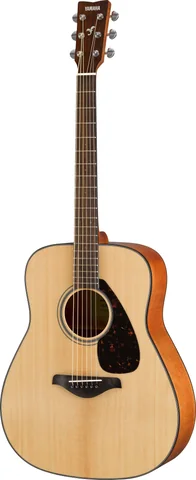
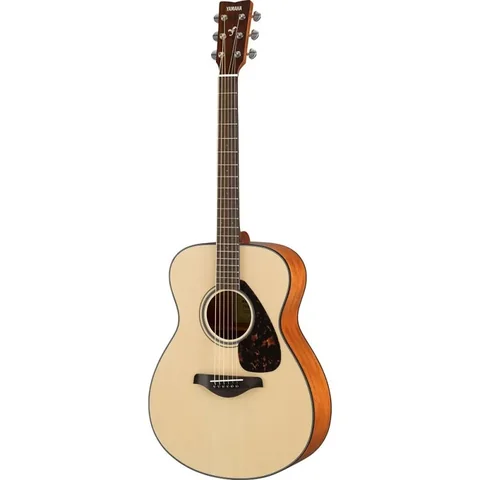
If you are weighing up these two models, it is important to acknowledge their main difference. The FG in Yamaha FG800 is an abbreviation for folk guitar, whereas the FS in FS800 stands for folk small.
This means that the FS800 is a better option for players of a smaller build and stature, whereas the FG800 will satisfy anybody in the market for a full-size acoustic guitar.
Now that we have established the primary difference between these two models let’s further investigate what makes them such a good option for anyone looking for a quality acoustic on a budget.
Features
Both guitars share the following features:
- Nato Sides
- Sitka Top
- 25” Scale Length
- Die Cast Tuners
- Rosewood fretboard
- Urea Nut
- Urea Bridge Bins
- 43mm nut width
- Faux tortoiseshell pickguard
- Black Binding
- Choice Of Matte Or Gloss Finish
- Matte Finish On The Back Of The Neck
Build Quality
These guitars both feature a solid Sitka Spruce top that provides a clear and sharp tonality, often associated with instruments that boast a much heftier price tag.
The sides are comprised of Nato, a species of timber comparable to the tried and true material of mahogany.
Improvements have been made to both series since their prior iterations in the 700 line; the most notable is the inclusion of scalloped bracing, which accentuates the projection of the instruments, helping them cut through dense accompaniment.
A rosewood fingerboard rounds out the package, and we were very pleased to see that the condition of the fretboards on both models we assessed was not of the dry and pale variety that one may associate with guitars of this price range, instead being relatively thick dark pieces that will be sure to stand the test of time.
Due to Yamaha’s intention of keeping the price of the FG800 and FS800 down, using both Nato and Sitka tonewoods ensures that the buyer is purchasing a quality product that sounds good and is durable without necessarily breaking the budget.
Playability
Both guitars feature a 25” scale length, the standard scale length for acoustic guitars with which most users will be familiar. This scale length provides a decent amount of space between each fret from the nut to the instrument’s sound hole.
Speaking of the nut, both instruments have a nut width of 43mm, ensuring comfortable string spacing. This is important as string spacing dictates how well a guitar will work for specific styles, i.e., fingerpicking, pick playing, slide, etc.
We found that a nut width of 43mm made both guitars hold a relative middle ground in terms of working for various playing styles.
We are also pleased to report that both models come with an adjustable steel truss rod installed, which for some bizarre reason, is a feature omitted on some lower-priced acoustics.
The truss rod on both models was relatively easy to adjust without any stress-inducing creaks or cracks. It enabled us to adjust the neck relief to a point where both guitars felt great to play without any inherent buzzing or other issues.
Extra Features
Both guitars come equipped with die-cast tuners that felt reasonable enough when in use, the gear ratio gives a smooth tuning action, and we did not experience any creaks or tight keys while tuning either instrument.
This is great as the tuning keys are generally the first piece of hardware to get thrown into the fire when manufacturers decide to keep costs down on an acoustic guitar.
Unfortunately, neither model has electric functionality like an inbuilt preamp, pickup, or output jack. This immediately rules out plugging the FG800 or FS800 into your favorite acoustic amp and playing an electro-acoustic set.
Still, given the price range, this is a smooth process, and comparable functionality can be added by incorporating aftermarket products such as those supplied by Fishman.
The faux tortoiseshell pickguard that adorns the Sitka top is a nice touch; it gave both the FG800 and FS800 a touch of elegance.
Not only does it look great this arrangement will also protect the top of the guitar from getting scratched up.
At the same time, it is subjected to vigorous strumming with a plectrum ensuring that no matter which model you choose, it will also look great both on stage and in the studio for years to come.
Urea bridge pins round out the package, the same material used to craft the nut. Upon thorough inspection, there are no apparent concerns with how either will hold up over periods of extended use.
Occasionally, lower-priced acoustics will feature plastic appointments that tend to crack or snap. Still, thankfully, Yamaha has taken the time to utilize materials that are cost-effective and durable.
As this is a relatively bare-bones package, the last thing we can bring your attention to is the fit and finish of both guitars. Fortunately, Yamaha offers both gloss and matte options.
As a manufacturer, this is a great decision on their behalf as it appeases people who are partial to both without leaving either contingent out.
However, the necks are exclusively matte finish which should appease most consumers as this is the general player preference.
Head to Head
Now that we have taken the time to highlight the differences and similarities between both instruments, how do they compare when pitted against each other head-to-head?
After spending some time with the Yamaha FG800 and FS800, it quickly becomes apparent that both instruments are budget-priced, but this doesn’t necessarily equate to them only appealing to beginners.
Both models possess an inherent quality that would please even a professional player if they purchased either guitar as a backup to their main instrument.
Either is a fantastic choice for the beginner to the intermediate player. It would serve its purpose valiantly for years without concern for longevity or build quality.
The FG800 is a full-sized dreadnought guitar that projects the full-bodied sound one would closely associate with that of a dreadnought.
No, this budget-priced instrument isn’t going to dethrone your premium-priced Martin or Taylor, but it’s going to try damn well hard to do so for the duration of time you have it in your lap, and who knows, it might even win you over in the process.
The FS800 is a full ¾” of an inch smaller than the FG800, and while this doesn’t look like much on paper, we feel it when switching between each instrument.
While the FS800 certainly isn’t a parlor guitar, and its scale length remains unchanged, we feel it would be better suited to players of smaller stature who don’t want to wrangle a full-sized dreadnought.
Another aspect in which both instruments differ is in sound and tone. The FS800’s smaller body profile omits a brighter, more present tone.
This would lend itself quite well to fingerpicking styles where the added clarity and enhanced treble will let complex arpeggios and single note lines ring free of any low-end obstruction or mud.
On the other end of the spectrum, the full-sized body of the FG800 results in a much deeper sound, with considerably more projection and sustain.
This is the model best suited to the singer-songwriter banging out open chords in accompaniment to their voice or that of a bandmate.
This model would also be a bit better in a band situation without being mic’d up, but this is to be expected due to its larger size.
Wrapping Up
Hopefully, our guide on the Yamaha FS800 and FG800 has provided some much-needed insight to buyers who are left scratching their heads deciding which model best suits their needs.
With both models sharing so many features, there is little to compare as they are both quite similar.
Ultimately, determining what you require in terms of tonality and what you are willing to endure in terms of body size will make the choice clear.
Rest assured that regardless of which model you choose, you will purchase a quality acoustic guitar that will be a great musical companion for many years.
After new strings? Check out our guide to the 7 Best Acoustic Guitar Strings!