

- Shure is one of the world’s most famous microphone manufacturers
- Can the PG58 offer a viable alternative to the industry-standard SM58?
- Which offers the best value for money?
- Also, check out our post on the Shure SM58 Vs RODE NT-1A!
Shure is one of the best microphone manufacturers in the world today, favored by many artists and music professionals for their quality and durability. Did you know Old Blue Eyes himself, Frank Sinatra, always insisted on his favorite Shure SM58 when performing? While the recommendation of Sinatra might be impressive enough, if you have worked in the music biz for a long time, you will probably have encountered the SM58 yourself. However, can the less expensive PG58 offer a similar experience?
What Is The Difference Between Shure SM58 And PG58?
| Feature | Shure SM58 | Shure PG58 |
| Microphone Type | Dynamic | Dynamic |
| Polar Pattern | Cardioid | Cardioid |
| Frequency Response | 50 – 15000 Hz | 60 – 15000 Hz |
| Sensitivity | -56.0 dBV/Pa | -55.0 dBV/Pa |
| Output Impendence | 150 Ω | 300 Ω |
| Weight | 298g | 321g |
| On/Off Switch | No (not on the standard version) | Yes |
| Accessories | Stand Adaptor, Zippered pouch | 15′ XLR Cable, Mic Clip, Thread Adaptor, Storage Bag |
Price
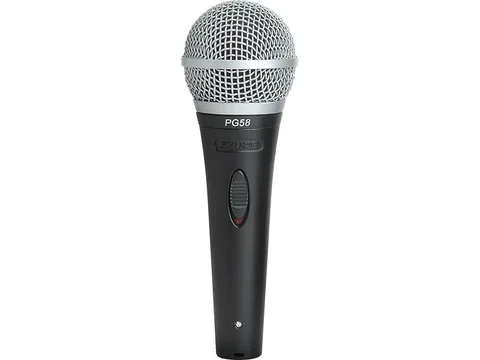
The price is the biggest difference between the Shure SM58 v Shure PG58. Amazingly after nearly 50 years in production and establishing itself as the industry standard mic for live vocals, the SM58 still comes in at under $100, while the PG58 can often be found at half that price, if not less. That said — both offer excellent value for money, but how much do they differ in performance? Although both microphones look almost identical and many argue have a similar sound, when used in larger sound settings, there are some noticeable differences in the sound quality and clarity of the two microphones.Frequency Range, Noise Cancellation & Other Tech Specs
The frequency range of the SM58 is slightly better than the PG58 for recording those more delicate nuances of a track, with the lower impendence of the SM58 ensuring higher frequencies remain crisp even when using longer cables. While these may sound like minor differences considering the lower price of the PG58, when it comes to noise cancellation, the SM58 shines way above the PG58. As a beginner, you may not notice too much the higher impendence, the handling noise, the lightly lower frequency range, and the extra weight of the more affordable PG58. If you are willing to accept this, the PG58 offers a great microphone at a great price. However, if you will be using your Shure microphone more regularly for larger gigs or recordings, then the extra money spent on the SM58 will prove worthwhile.Durability
The Shure SM58 are notably known for their powerhouse construction. It’s almost guaranteed to last you years without failing. In fact, I still use the SM58 I bought over 20 years ago, and it’s still flawless. That said — the PG58 is also built well, but whether it can hold up to the esteemed construction of the SM58 is up for debate.PG58 vs SM58: Sound Quality
Frequency Response
Both microphones use a cardioid polar pattern meaning they pick up sound best from the front, some from the sides but nothing from behind the capsule – ideal for busy stages where many instruments or singers may be present. As dynamic mics, they don’t need the phantom power often required by a condenser microphone but still have a reasonable sensitivity and frequency response range. Both mics can pick up frequencies to 15 kHz, making them a good choice for recording soaring vocals and loud instruments, even those high-pitched screams of heavy rock. However, for the low frequencies, the PG58 is capped at 60 Hz compared to the 50 Hz of the SM58. Although many would argue this won’t make too much difference when used for recording quieter podcasts, the SM58 would better capture a more complete sound.Frequency Distribution
The SM58 gets its chance to shine with a much-needed boost to those sometimes flatter parts of the audio spectrum, particularly the higher mids or very high top ends. Although it won’t be as bright as a condenser microphone using phantom power, the frequencies are perfectly set for live performances. The PG58, by comparison, isn’t a bad mic but just sounds pretty flat and dull next to the SM58. Some of the desirable vocal frequencies have been bumped up for live vocals, but the clarity is nowhere near as good as the SM58 (you can always boost these frequencies with the EQ of the mixer if needed).Winner: SM58
Output Impendence
When using dynamic wired microphones like the SM58 or PG58, the impendence output can often have a major effect on the sounds picked up to be amplified. Higher impendence mics with longer cables will lose some of the crisp top ends, especially in live situations. Although both microphones are rated at 300 Ω when connected to a low impendence input, the SM58 drops to 150 Ω. Unless you intend on using them with extremely long XLR cables, both mics work pretty standardly for the impedance they feature.Winner: Draw
Noise Isolation
Both microphones, the SM58 and the PG58 have a cardioid polar pattern and enjoy the inherent noise cancellation perks from such a feature. The SM58, however, has a built-in spherical wind and pop filter, which reduces some of those explosive pop noises associated with dynamic mics. A pneumatic shock mount system also minimizes the transmission and amplification of vibrations and mechanical noises. Where this really comes into play, and you see what the difference between Shure SM58 and PG58 is with live performances, especially those not using a mic stand. Sadly, the PG58 picks up nearly every shake or move of the performer and then amplifies them as annoying distortions. The SM58, with its somewhat thicker construction, doesn’t have this flaw and is better suited for those more lively performers or Mick Jagger wannabes.Winner: SM58
Features and Connectivity
The SM58 was one of the first mass-produced mics to feature a balanced XLR socket at the base of the mic, which has now become pretty much the norm for all mics. It was also one of the first not to feature an on/off switch, as most performers would prefer to switch the mic off at the mixer or soundboard rather than accidentally catch the switch mid-song. The PG58 still features the same balanced XLR socket at the base but also has an on/off switch that is better suited for the karaoke situations in which this mic may be used (there is a version of the SM58, the SM58S, if you really want that switch). The lack of extra features on the mic is one of the things performers love about the Shure microphones; they’re just designed to be functional, plug in and go.Winner: Draw
Construction and Durability
You would be forgiven for assuming that due to the lower price point, the PG58 isn’t quite as durable as the power tank that is the SM58. Shure is famous for its amazingly durable products, and the PG58 is no exception. Both microphones are constructed of die-cast metal, although the PG58 comes in slightly heavier at 22.5 ounces compared to the estimated 10.5 ounces of the SM58. For live performance, this tips the odd slightly in the favor of the SM58, with the lower weight allowing the performer to release their full energy without feeling weighed down. The heavier weight can often be a deal breaker for some artists looking at the SM58 vs PG58 dynamic microphones. It could be more likely to damage in the event of a forceful drop. Winner: SM58Shure PG58 vs SM58: Which Is Better? The Takeaway Answer
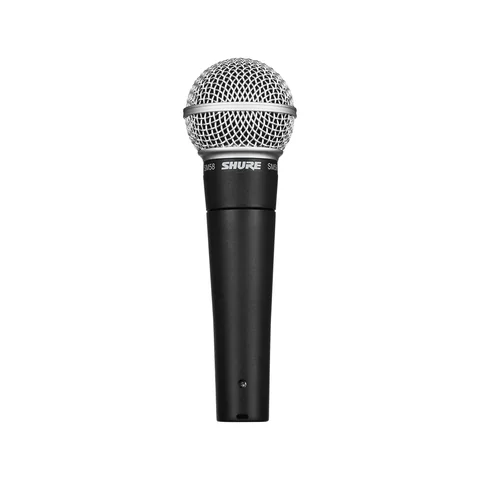
Shure SM58
The industry-standard vocal mic, and the winner here on noise isolation.
FAQs
Is the Shure PG58 Good for Singing?
As virtually an identical copy of the Shure SM58, the PG58 is an ideal choice for vocalists, whether they’re lead singers or backup singers. The polar pattern of the cardioid means only their vocals will be captured without any of the background noise of nearby instruments or the audience. With its clear and bright mid-tones, it could be argued the PG58 is a better mic for speaking in activities like podcasts, interviews, poetry readings, or any other spoken application. It can sometimes lack the extra loudness needed for more explosive singing performances, with the SM58 providing an extra boost to those mid to higher tones.How Do I Sync My PG58?
Due to its lower cost, you will often find the Shure PG58 sold as part of a wireless mic package along with a receiver such as the Shure BLX24 or Shure PG4. You can also find the SM58 included in such packages, but this will normally put the overall cost up to a point where it’s not viable for budget systems. Syncing a Shure microphone couldn’t be simpler in 2 easy steps.- Start by ensuring the microphone and receiver are on the same frequency, then press Scan on the receiver to find a clear channel. The system will then scan for a clear channel with the lowest levels of interference.
- To synchronize the mic (transmitter) to the receiver, align the infrared ports on both the mic and the receiver and press the Sync button on the receiver. When it has successfully synced, the microphone LED will flash red for a moment, with the receiver-ready light now being lit.


Where can I purchase a shire micophone 58. For $100. I’m in WA. Many thanks 🙏