- Shure SM7B is one of the most popular mics for podcasting
- We look into the best Shure SM7B alternatives
- Find out which mics fit our criteria; sturdiness, sound quality, signal output
- Also, check out the best podcast microphones!
The Shure SM7B is easily among the most popular podcast/broadcast mics, if not THE most popular podcast/broadcast mic.
Google image searches for the terms “broadcast” and “podcast” bring up SM7B’s in the first few results, and the most-listened-to podcaster at the time of writing, Joe Rogan, uses SM7B’s for his show.
Just because a lot of people are using the SM7B does not mean that it is the mic for you, though. There are plenty of alternatives to the SM7B that may suit your needs better.
We will explore seven of these potential dynamic podcast/broadcast mics based on the following three criteria in the hopes of setting you up for success in choosing the best mic for your needs:
- Sturdiness
- Sound quality
- Signal output
Introducing The Shure SM7B
The SM7B’s predecessor, the SM7, began as an experiment by Shure engineers intending to take the Unidyne III capsule from the SM57 and build an extended, full-range microphone that could be used in any application.
The SM57 debuted in 1973 and immediately became popular with broadcasters. Nearly 10 years later, Quincy Jones and Bruce Swedien used the SM7 to record Michael Jackson’s vocals for Thriller.
The SM7A came out in 1999 with an improvement to the yoke mount and the humbucking coil. The SM7B dropped two years later, in 2001, with an additional larger windscreen.
All that said, each of the three SM7 iterations performs more or less the same as the others.
Best Alternatives To The Shure SM7B
Whether the issue is the relatively dark tone of the SM7B, its hefty price tag, or its objectively low signal output, the Shure SM7B, like all microphones, is not a perfect mic.
Although it is sturdy, a real workhorse, and a mic that can be trusted to perform consistently, part of the price tag on this mic likely comes from its notoriety.
Fortunately for us, there are plenty of alternative mics to the SM7B in the dynamic broadcast category that might get you the sound you want for far less money.
- sE Electronics DCM6 DynaCaster Broadcast Dynamic Microphone (Best Overall)
- Pre-Sonus PD-70 Dynamic Cardioid Broadcast Microphone (Best Value)
- Electro-Voice RE20 Dynamic Broadcast Microphone (Best Premium)
- RØDE PodMic
- MXL BCD-1 Dynamic Broadcast / Podcast Microphone
- Audio-Technica AT2040 Hypercardioid Dynamic Podcast Microphone

- Exceptional performance
- Versatile
- Premium build and reliability

- Included windscreen
- Tailored frequency response
- Durable housing

- A cult figure in audio
- The best mic for voice applications
- Tight low-end
- Delivers an intimate made-for-radio sound
- Robust, all-metal construction
- Minimizes unwanted plosives
- Clear vocal response
- Rich, flattering sound
- Affordable

- Perfect for podcasting
- Ultra-smooth audio
- Multistage foam mesh windscreen
- Inspired by legendary equipment
- Built to last a lifetime
- Easy to use
1. sE Electronics DCM6 DynaCaster (Best Overall)
- Exceptional performance
- Versatile
- Premium build and reliability
One of the great disappointments of the SM7B when it comes to regular old inside-voice dialogue is the low signal output.
It is a great vocal mic for recording aggressive vocals, but relatively quiet spoken word does not go a long way with the SM7B without some sort of inline boost.
The sE Electronics DCM6 is a relative newcomer to the scene that provides clean sound, AND it comes with its own phantom-powered built-in boost, making it a more capable and cheaper alternative to the Shure SM7B.
Features:
- 48V phantom power enables additional 30dB gain with DYNAMITE booster
- Boosted signal maintains transparency and cleanliness
- Built-in pop filter reduces plosives
- Durable housing with corrosion-free finish
Review
I first became interested in the DCM6 when I was looking for a third mic to accompany my SM7B plus CL-1 setup for taking on the road with me.
I was running out of space in my backpack (and money in my wallet), so I wanted a mic that I would not have to boost in order to match the signal coming out of the boosted SM7B’s into my Zoom H6.
Now, if you have enough transparent gain in your recording setup that you can get a decent signal out of an SM7B without an inline boost, then you might prefer the DCM6’s less beefy little brother, the DCM3, which is the same microphone without the DYNAMITE booster and for $50 less.
In terms of sound, the DCM6 is pretty balanced across the low- and mid-range, with an airiness and brightness in the higher range that causes it to stand out from the darker quality of the SM7B.
That aspect of the sound quality is totally subjective in that one is not necessarily better than the other: you might prefer a brighter or a darker sound, depending on your voice.
Generally speaking, the DCM6 is more likely to flatter a deeper voice than a higher voice, as the airy upper range can bring out a harsher quality in voices with higher fundamentals.
At any rate, the DCM6 is now a permanent third mic for me, particularly for the deeper-voiced regular host on one of the podcasts I produce, and I would recommend it to anybody looking for decent sound and a big signal output.
2. Pre-Sonus PD-70 (Best Value)
- Included windscreen
- Tailored frequency response
- Durable housing
For just $100 at the time of writing, the Pre-Sonus PD-70 is our pick for the best budget broadcast microphone because it looks and sounds great for the price but also has the sturdiness of a more expensive microphone like the Shure SM7B.
With a surprising amount of competition at the $100 and below price point, including the RØDE PodMic, the Audio-Technica AT2040, the MXL BCD-1, and the Shure SM58, the PD-70 finishes just above the competition because each of the other mics is missing one of the three criteria, whether it be sturdiness, sound quality, or signal output.
The PD-70 is a great all-arounder, hitting all the marks admirably for a $100 broadcast mic.
Features:
- Durable housing
- Frequency response flatters the human voice
- Not feature-rich but excels at its main purpose of recording a speaking voice
Review
The PD-70 is particularly well-matched to the sE DCM6, not in terms of boosted signal output but in terms of frequency response, which means it is very similar to the DCM3 in terms of both specs and price point.
This mic is similarly bright and similarly rugged in build. It is more sensitive than the Shure SM7B (as are most, if not all, microphones in this category), though its sound is not nearly as detailed and articulate.
That said, the difference in the complexity of sound might not be quite to the point of a $300 difference; thus, the PD-70 should certainly figure in the calculations of anybody looking for a decent $100 mic that will give them years of reliable use and a sound that is “good enough” for most listeners.
3. Electro-Voice RE20 (Best Premium)
- A cult figure in audio
- The best mic for voice applications
- Tight low-end
The Electro-Voice RE20 is likely a close second to the SM7B in terms of recognizability in the world of broadcast dynamic mics.
It has been around since 1968 and has been used in both broadcast and musical applications by all sorts of household names.
This is the one microphone on the list that costs more than the Shure SM7B, but a new RE20 is less expensive than the cost of a new SM7B bundled with a Cloudlifter CL-1 or similar inline boost, which is required to get the sort of signal output provided by the RE20 (to say nothing of its sound quality and features, which we will get into below).
Features:
- Variable D design reduces proximity effect
- Steel casing and hum-bucking coil provide excellent magnetic shielding
- Integrated blast and wind filter eliminates plosives and sibilance
Review
The thing that I find most special about the RE20 is that it makes it significantly harder to get a bad take.
I recommend bringing this mic out for use with guests who know nothing about mic discipline because it is built to minimize all of the problems that come from a lack of mic discipline: proximity variability, plosives, sibilance, even clipping from a sudden loud reaction practically disappear when working with this mic.
Moreover, its output signal is significantly higher than that of the SM7B, which means never needing to consider an inline boost to make up for insufficient gain on a preamp.
The relatively even frequency response on this mic makes it a great all-arounder for a variety of voices, especially if you have decent EQ-ing chops to tailor the sound to each particular speaker’s voice in post-production, and the sound of the human voice comes through delightfully articulate and detailed.
I can honestly say that if I had it to do all over again, I would buy a few RE20s and dispense with my SM7Bs altogether.
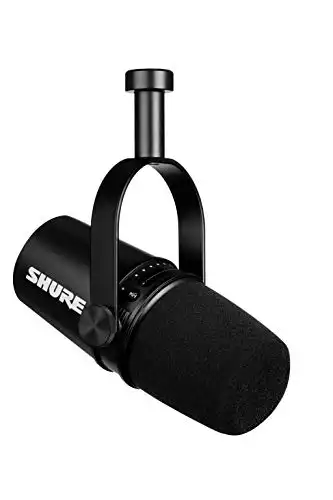
4. Shure MV7
- Inspired by legendary equipment
- Built to last a lifetime
- Easy to use
We would be remiss if we did not begin with the SM7B alternative that Shure intended as an SM7B alternative. The MV7 is a lot like the SM7B (read our full comparison here) but with a few modifications to adapt it specifically to vocal applications and a smaller price tag.
The MV7 is also a little smaller, lighter, and will not require the same gain to beef up its signal.
Features
- Specifically designed for clarity in the mid-range frequencies of the human voice
- Dual output: XLR or USB compatible
- Two modes, near or far, for your specific vocal preferences
Review
The Shure MV7 is sometimes called SM7B’s little brother, which is a useful image.
However, keep in mind that you will not get the signature SM7B sound from the MV7. That said, you will get a clear sound through the mids that may be more your cup of tea, especially if you are new to podcasting or recording the human voice.
The dual output capacity of the MV7 makes it a singularly accessible mic for anybody new to the scene who has yet to pick up an interface, and the onboard and app-based customizability make it possible to tweak the sound to your exact specifications without having to spend quite as much time in the DAW.
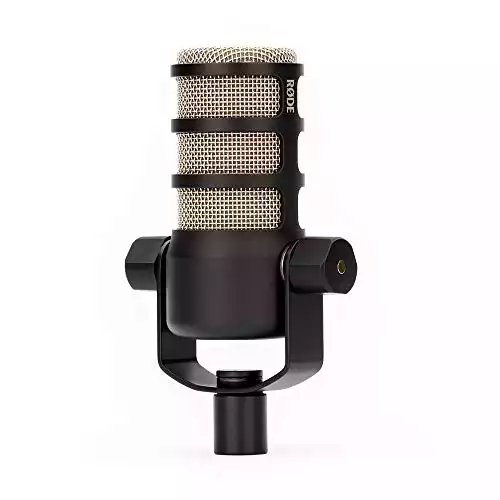
5. RØDE PodMic
- Delivers an intimate made-for-radio sound
- Robust, all-metal construction
- Minimizes unwanted plosives
The PodMic is RØDE’s budget podcasting-specific dynamic mic. It has a distinct look to it and the weight and durability of a more expensive mic.
With the internal pop filter, shock mount, and integrated swing mount, it strikes an elegant profile on the podcasting desk.
Features:
- Internal pop filter, shock mount, and integrated swing mount
- Aesthetically pleasing design
- Sturdy, all-metal construction
Review
Though I am generally a big fan of RØDE products, the PodMic does not hit the mark for me.
It is optimized to pair nicely with the RødeCaster Pro podcast recording station, which offers built-in pathways for adjusting sound, and these effects can be replicated in a DAW, of course.
As far as out-of-the-box readiness for capturing the human voice is concerned, I find I prefer the flatter frequency response through the midrange and airier upper range of the PD-70 for this price point.
Something about the PodMic sound comes through as vacuous and dull to me.
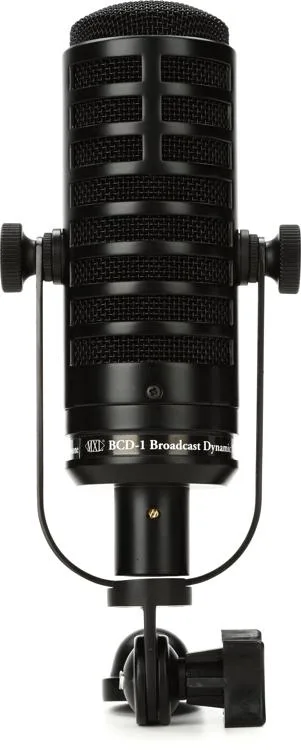
6. MXL BCD-1 Dynamic Broadcast / Podcast Microphone
- Clear vocal response
- Rich, flattering sound
- Affordable
Having used the MXL 990 throughout college for my dorm room recording sessions, I had some idea of what to expect from MXL mics, but I was pleasantly surprised by the BCD-1.
I picked it up for about half the price via Amazon (typically, I stick with Sweetwater because their financing options make it easier for me to make unwise decisions and pay for them later) and definitely ended up with more than $80 worth of microphone.
That said, the usual hallmark of MXL mics of shortcuts in the mounting structure of the mic makes it frustrating to work with, and the sound does not make up for these shortcuts to the point of making it worthwhile to jury-rig a mounting solution.
Features:
- Rejects plosives reasonably well
- Surprisingly low noise floor
- Comes with case and windscreen
Review
I will admit to bringing some prejudice to my review of the BCD-1, just because I am so familiar with the 990, an incredibly noisy condenser microphone that I used for years before getting better acquainted with audio equipment.
Thus, I was pleasantly surprised to find that the BCD-1 has a low noise floor but a fairly robust signal. The yoke mount is a major weak point in the design of the mic, as it comes out of the box, practically ready to throw in the towel.
As a result, you have to do all of your setups with other points of adjustment on your mic stand, which is an issue if you are using a tabletop mic stand with no adjustable joint.
With mic position relative to the source being such a crucial variable with dynamic broadcasting mics, this in itself is enough of a reason to avoid the BCD-1 and pick up a better-designed mic.
That said, the sound itself is fairly warm and balanced, so if, in a different reality, the folks at MXL invested in quality materials for the yoke mount on this mic, or if the folks at PreSonus, sE, and RØDE did not invest in quality mounting fixtures for their microphones, I would probably recommend this mic.
For better or for worse, we live in this reality, and as a result, I would caution podcasters to avoid the BCD-1.
7. Audio-Technica AT2040 Hypercardioid Dynamic Podcast Microphone
- Perfect for podcasting
- Ultra-smooth audio
- Multistage foam mesh windscreen
This will not be the first review of the AT2040 to identify its underperformance as a “dynamic podcast microphone.”
With several other microphones at the same price point that outperform the AT2040, it is not worthwhile to put effort into beefing up the sound of this microphone.
Features:
- Aesthetically pleasing design
- Not much else
Review
The AT2040 comes out of the box looking and feeling like a solid purchase: unfortunately, none of the visual and tactile appeals of the microphone really matters when you hear the signal that comes out of it.
Sure, there is the confounding variable of psychoacoustics, where the appearance of a microphone might convince an uninitiated listener that what they are hearing is high-quality audio, but if you’re only concerned with audio, then the thin, brittle sound of this mic is an immediate turnoff.
With every other $100 mic in this list providing a significantly warmer, richer, more balanced sound, there is really no reason to pick up this microphone. That said, there are a few things you can do to get a rounder sound out of it.
Utilizing the proximity effect to your advantage will introduce a little more bass from your voice into the signal, and removing the internal pop filter from the grille will introduce some of the colorations that are otherwise missing (but certainly not all of it).
Finally, adding a harmonic exciter to your signal chain will fill in some of the harmonic blanks in your output signal.
With the other options out there, though, I cannot imagine why you would want to put in all of the work that Audio Technica should have done before they sold you the microphone.
Wrapping Up
There are millions of podcasts active at the moment. With the explosive expansion of the medium in the past decade, it stands to reason that audio companies would want to sell products specifically tailored to capture this fast-growing corner of the market.
Not all of these products are worth adding to a podcaster’s collection (see the BCD-1 and the AT2040), but some of them are more than adequate for the task and worth considering as alternatives to the world-renowned SM7B.
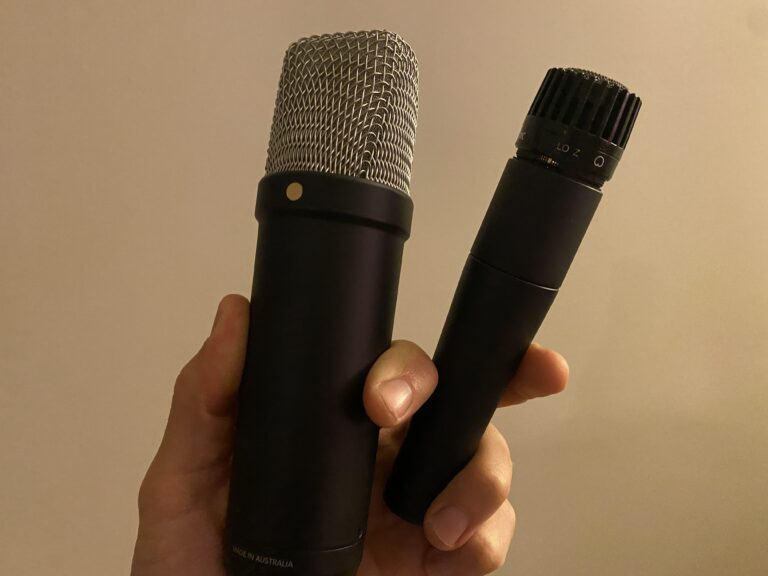
Of course, if you are not wedded to a dynamic broadcast-style microphone, there are popular condenser microphones that might be to your liking, like the Blue Yeti, the Audio-Technica AT2020, and the RØDE NT1, or the HyperX QuadCast.
But if you’re looking for an SM7B alternative that sounds and handles like an SM7B, one of the mics listed above will certainly do the trick.