- Understand the differences between 2 and 3-way speakers.
- Discover which choice is best for your setup.
- Learn the reasons for having different amounts of drivers.
Whether you’re a car audio fanatic, hi-fi enthusiast, DJ or producer looking to source the best possible speakers, it’s important to understand the distinction between 2-way and 3-way speakers.
Both come with their own sets of features, pros and cons. Here they are at a glance:
| Features | 2-Way Speakers | 3-Way Speakers |
| Number of drivers | 2 | 3 |
| Types of drivers | Woofer, tweeter | Woofer, midrange, tweeter |
| Frequency range | Limited | Wider |
| Price | Lower | Higher |
| Power efficiency | Higher | Lower |
| Great for | Most consumer applications | High-end audio applications, critical listening, audiophiles. |
The Differences Between 2-Way and 3-Way Speakers
Now that you have a general overview of the major differences, let’s dive deeper into the main ones. We’ll go over the implications so you can get a better idea of which one to purchase for yourself.
1. Number Of Drivers

The most obvious difference is the number of drivers on the speaker. A 2-way speaker has two drivers, and a 3-way speaker has three drivers. The difference lies in the frequency split between the speakers.
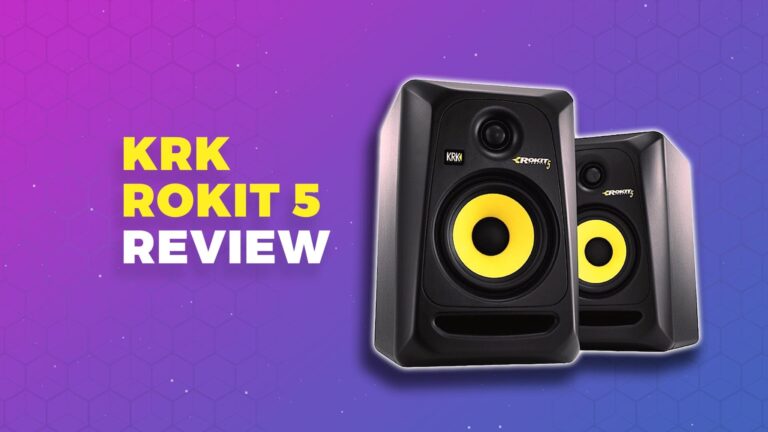
The frequencies in 2-way speakers are split into high and low between the two drivers. One is a woofer built to handle sub-low frequencies, and the other is a tweeter designed to handle the higher frequency band.
Like a 2-way system, a 3-way speaker has a tweeter and a woofer. However, it has an additional speaker, a midrange driver targeting the mid frequencies, and is often called the mid-bass speaker.
A 3-way speaker system generally offers a more faithful reproduction due to its ability to distribute frequencies through the extra midrange channel. This frees up the bass driver and the tweeter from working harder.
However, this does not equate to better power efficiency. This leads us to our next point…
2. Power Efficiency
Generally, 2-way speakers are more power-efficient than 3-way speakers as they have fewer drivers to power.
This means that 2-way speakers can be driven by lower-powered amplifiers, which can save you money on your power bill and reduce your carbon footprint.
On the other hand, 3-way speakers require more power to operate effectively due to the extra midrange driver. If you’re using a passive Hi-Fi system or studio monitors, you may need a more powerful amplifier to drive them.
If you need to, read up on passive vs active speakers here.
3. Sound Quality

3-way speakers often have better frequency balance and are more sonically accurate than 2-way speakers. As you might have guessed, this is, once again, due to the additional midrange driver.
By contrast, 2-way speakers have a limited frequency range because they only have a woofer and a tweeter. While they can still produce more than adequate sound quality (many incredible Hi-Fi systems and studio monitors use 2-way speaker configurations), they may not reproduce the same level of detail and accuracy as 3-way speakers. This is often most noticeable in the midrange frequencies.
3-way speakers tend to also have more complex and sophisticated crossovers. A well-designed 3-way crossover can help to ensure that each driver is operating within its optimal frequency range, resulting in a more natural and balanced sound.
💡 What’s A Crossover? The role of a crossover is to separate the frequency spectrum between however many drivers are within the unit. Some more modern speaker systems will use a digital crossover, often a more robust and accurate way of achieving crossover.
4. Price
More moving parts = higher cost. 3-way speakers tend to be more expensive than 2-way speakers, due to the additional drivers and complexity of their design.
If you are on a tight budget, a 2-way speaker system will suit most needs. While they may not offer the same level of detail and accuracy as 3-way speakers, many high-quality 2-way speakers can still produce excellent sound.
So, Are 2-Way or 3-Way Speakers Better?
This depends on several factors: the size of your space, how you intend to use them, and how much you personally value high fidelity. Let’s go over each of them:
- Large listening environments: If you have a large listening environment, such as a home theater or a spacious living room, a 3-way speaker system can be a good choice. However, it isn’t essential.
- Critical listening: If you’re a mixing or mastering engineer, and your living is earned by your ability to make subtle but critical adjustments to tracks, then having a set of 3-way studio monitors can give you an edge. 3-way speakers reproduce more detailed and accurate sound across a wider range of frequencies, which can help you identify and correct any issues in your mix.
- High-end audio: If you are an audiophile looking for the most faithful reproduction of sound, a 3-way speaker system may be the way to go. This is because 3-way speakers offer better overall sound quality and more detail and accuracy than 2-way speakers.
Here’s a personal buying tip: cheap 3-way speakers will often sound worse than a good 2-way speaker. But a high-quality 3-way speaker will almost always outperform a good 2-way speaker. In other words, don’t bother with 3-way speakers if you aren’t prepared to pay more.
FAQ
What About 4-way Or Even 5-Way Speakers?
They can be worth considering, but be careful of budget speaker brands simply adding ‘more drivers’ to give you the impression of ‘better quality’. More drivers require more complex crossover designs, typically only reserved for high-end audio applications.
These premium speaker systems are typically used in high-end audio applications, such as professional recording studios, home theater systems, and some club sound systems.
It’s worth noting that these types of speaker systems can be very expensive and may require more complex crossover designs to properly integrate all drivers. They also require more power to effectively support all of the drivers.
The exception is car audio, where it is commonplace to see 4-way and 5-way speakers packed into a small speaker unit.
What is a Good Crossover Frequency?
A good crossover frequency produces a balanced listening experience, filtering out all unwanted sounds in each driver. Speakers with a defined frequency response will output outside their capability if the crossover isn’t applied correctly.
This will produce a tinny, distorted tone. Furthermore, a poor crossover will produce a muddy listening experience as there will be frequency peaks where more than one speaker will output too much of the same frequency.
There are no universal ‘best” crossover frequencies. Most speaker production companies have crossovers to best fit their speaker drivers.
However, there is a general guide for good speaker crossover practice:
Subwoofers
An excellent place to start is a low pass filter around 80 Hz. This crossover point will help optimize the low-end performance by removing frequencies above 80 Hz.
Mid-range
For the mid-range speaker, a bandpass filter between 250 Hz – 3.5kHz is good for crossover as speakers in this range tend to have a poor bass and treble frequency output quality. If the crossover surpasses this, it can cause some significant distortion.
Tweeters
For tweeters, a high pass crossover point of 3.5 kHz is recommended, as anything below this will lead to distortion as tweeters have a poor mid-bass performance.
What’s the difference between coaxial and 3-way speakers?
A coaxial speaker is a type of 2-way speaker. However, the configuration of these speakers is different from a standard 2-way speaker. It includes a tweeter stacked above the woofer speaker.
This is popular over regular single-cone speakers but is only really used within car audio.
What are active crossover speakers?
An active crossover takes place before the amplifier. This helps to provide a more accurate frequency split.
Before You Go…
We only scratched the surface of speaker configurations. If you’d like to brush up on more of the same, why not check out our guides on: